
Is It Body Image, Disordered Eating, or an Eating Disorder? A Guide for Your 20s & 30s
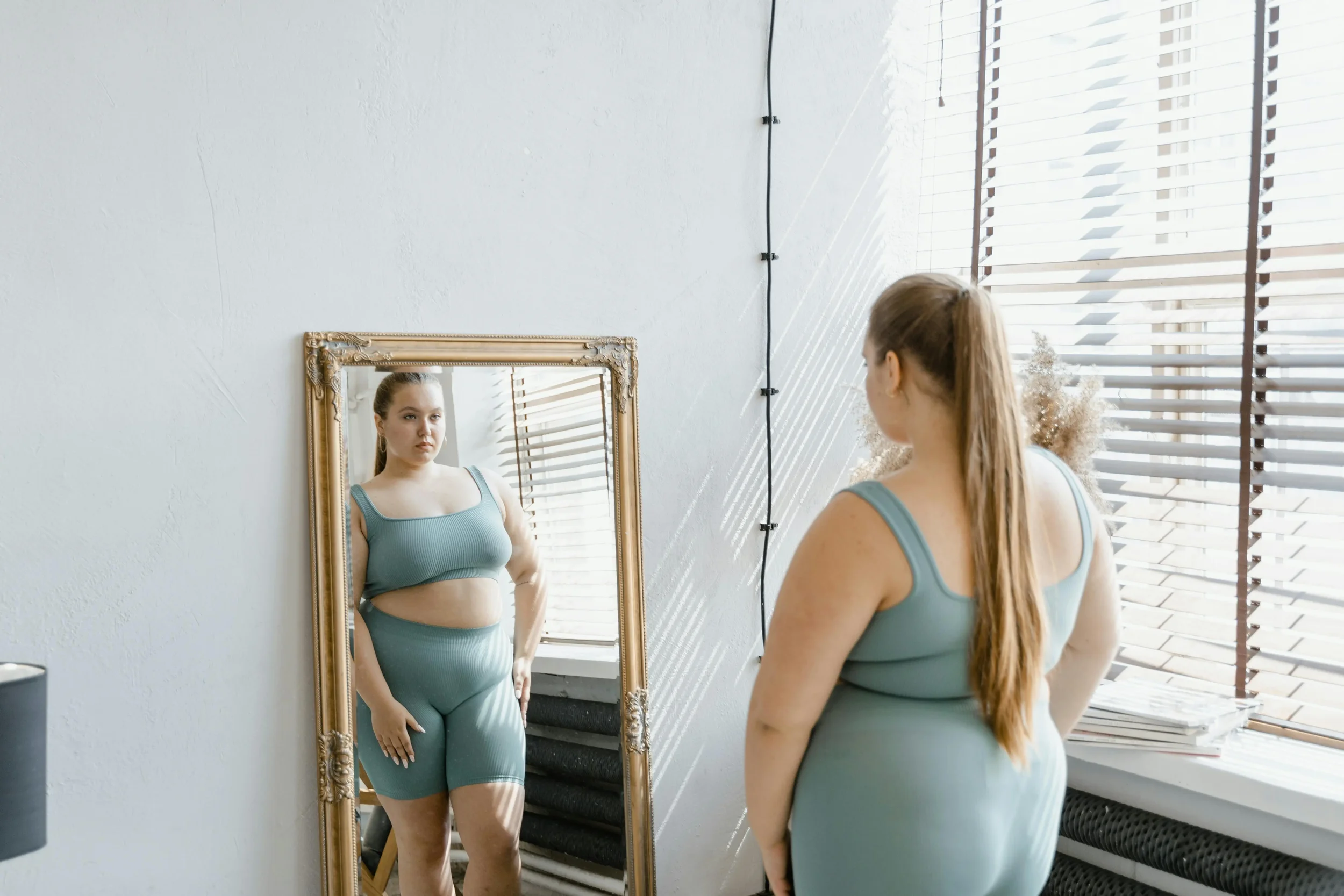
You're scrolling Instagram, comparing your body to the screen. You skipped lunch. You binged on ice cream last night and felt guilty. You check your weight multiple times a day.
Sound familiar?
If you're in your 20s or 30s, you probably recognize at least some of this. But the real question is: Is this normal body anxiety, or is something more serious happening?
There's a difference — and it matters. Understanding where you fall on the spectrum between body image concerns and a clinical eating disorder helps you figure out whether you need professional support, and what kind.
This guide maps the three categories so you can understand your own experience.
Understanding the Three Categories
Before diving deeper, understand this: Body dissatisfaction exists on a spectrum. Most people experience some level of negative body image, but not everyone develops an eating disorder. Research shows approximately 22% of adolescents and young adults engage in concerning eating behaviors — but far fewer meet clinical eating disorder criteria.
Think of it as a progression: body image concerns (common) → disordered eating patterns (risky) → eating disorders (clinical). Most people with body concerns never progress to clinical illness. Some do — and recognizing the warning signs helps you catch it early.
Category 1: Body Image Concerns (The Foundation)

Body image is the combination of thoughts and feelings you have about your body, shaped by internal factors (your personality, history) and external ones (media, peers, culture). If you’re in your 20s or 30s, you’ve absorbed messages about what your body “should” look like. You’ve probably noticed yourself thinking, “I wish I looked different,” especially after scrolling social media.
This is normal. This is what most people experience.
A positive body image is associated with higher self-esteem, a healthy body image, and greater body acceptance across different body size experiences, making individuals less susceptible to eating disorders. The flip side: negative body image increases your risk for mental health issues like eating disorders and depression, especially among young women facing unrealistic beauty standards.
Key characteristics of body image concerns:
Occasional worry about your appearance
Comparison to peers or social media (happens, but doesn’t consume you)
Some days feeling worse about your body than others
These thoughts don’t significantly interfere with daily life
Your eating patterns remain roughly normal
These concerns can affect people in any body, including someone at an average weight or a healthy weight.
What the research shows:Body dissatisfaction ranks among the top three concerns for young people and social media use correlates with increased body dissatisfaction, while weight stigma can make that dissatisfaction worse. But having body image concerns doesn’t equal an eating disorder — it means you’re navigating a culture obsessed with appearance.
Category 2: Eating Patterns at Risk (The Middle Ground)
Disordered eating includes specific behaviors like restrictive dieting, binge eating, self-induced vomiting, excessive exercise, or laxative use to lose weight or control weight — but without meeting full clinical eating disorder criteria. Some people also cut out entire food groups or make rigid rules around certain foods in the name of healthy eating.
Things are shifting here. You’re not just thinking differently about food and body — you’re acting differently in ways that could escalate.
Common concerning eating behaviors:
Regularly skipping meals or severely restricting calories
Binge eating followed by guilt or compensatory behaviors
Excessive exercise specifically to “earn” food or burn calories
Using laxatives or self-induced vomiting after eating
Obsessive calorie counting or rigid food rules
Avoiding social situations involving food
The key distinction: These behaviors are happening, but they may not have caused the level of functional impairment, frequency, or psychological impact that defines a clinical eating disorder. Restrictive patterns can still lower overall food intake before someone meets full diagnostic criteria.
The evidence: Approximately 22% of adolescents and young adults engage in concerning eating behaviors, according to a systematic review of 32 studies. This doesn’t mean 22% have eating disorders — it means they’re engaging in risky eating patterns that warrant attention.
Body dissatisfaction is the bridge. It’s the most potent predictor of progression from risky eating patterns to clinical eating disorders, but other risk factors matter. Negative body image combined with compensatory behaviors is a warning sign. You might restrict your eating due to body dissatisfaction, but without the severe cognitive features that define clinical eating disorders, you’re still in this middle category.
In our practice at the Baltimore Therapy Group, we often hear clients say: “But everyone does this, so it’s normal, right?” Yes, many people engage in some risky eating behaviors. That’s the unfortunate reality of diet culture. But “everyone does it” doesn’t mean it’s healthy or that you should ignore it. If your eating patterns are escalating, becoming routine, or causing you stress, that’s a signal worth paying attention to — not because you’re broken, but because early intervention genuinely makes a difference.
Category 3: Eating Disorders and Binge Eating Disorder (The Clinical Diagnosis)
Eating disorders are serious health conditions affecting both physical and mental health, and disorders are serious mental illnesses, not just “bad eating habits.” These aren’t “bad eating habits” — they’re psychiatric illnesses with the highest mortality rate of any mental disorder.
The most common eating disorders are anorexia nervosa, bulimia nervosa, and binge-eating disorder, each with distinct symptoms.
Anorexia Nervosa:
Severe food restriction
Intense fear of weight gain, even when underweight
Distorted body image (feeling fat despite being thin)
Weight/calories become all-consuming preoccupation
Physical toll: extreme weight loss, weakness, loss of menstrual period
Diagnosis often includes low body weight, and severity may be assessed in part using body mass index
Bulimia Nervosa:
Recurrent binge eating episodes (rapid consumption of large amounts)
Followed by compensatory behaviors: self-induced vomiting, laxative abuse, excessive exercise
Self-worth heavily tied to body weight and shape
Physical effects: electrolyte imbalances, tooth enamel erosion, sore throat
People with bulimia may appear to be at a normal weight, so outward appearance can be misleading.
Binge-Eating Disorder:
Recurrent binge eating episodes without regular compensatory behaviors
Significant distress about the binges
Sense of lost control during episodes
Often followed by shame, guilt, or disgust
Additional diagnoses include avoidant restrictive food intake, also called restrictive food intake disorder, and rumination disorder. In avoidant restrictive food intake cases, someone may avoid certain foods because of sensory issues rather than body-image concerns, which can interfere with proper nutrition.
The defining feature: In eating disorders, weight and shape dominate self-worth. The core feature is overevaluation of shape and weight — individuals judge their entire self-worth based on their body and their ability to control it.
This isn’t “I wish I looked different.” This is “My value as a person depends on my weight.”
The research: Eating disorders lead to severe health complications — heart issues, digestive problems, and co-occurring mental health disorders like depression and anxiety. Early treatment is crucial for recovery. They can also cause serious health problems, and some people may need support to gain weight safely in recovery.
How to Tell Which Category You're In
Answer these questions honestly:
1. How often are you thinking about food, weight, or your body?
Occasionally (body image concern)
Daily or multiple times daily (disordered eating)
Nearly constantly — it's hard to focus on anything else (eating disorder)
2. Are these thoughts and behaviors interfering with your life?
Rarely (body image concern)
Sometimes — you're declining social events or your mood is affected (disordered eating)
Frequently — eating, exercise, or appearance concerns significantly disrupt relationships, work, or school (eating disorder)
3. What defines your self-worth?
Multiple things: accomplishments, relationships, character, appearance (body image concern)
Increasingly your appearance and body control (disordered eating)
Almost exclusively your weight, shape, and appearance (eating disorder)
4. Are you experiencing physical symptoms?
No (body image concern)
Minor: fatigue, digestive changes, occasional dizziness (disordered eating)
Significant: extreme weight loss/gain, amenorrhea, weakness, electrolyte problems, tooth decay (eating disorder)
If you answered mostly in column 1: You're likely dealing with body image concerns. Column 2? Disordered eating. Column 3? You may have a clinical eating disorder and should seek professional evaluation.
A note we often share with clients: This self-assessment is a starting point, not a diagnosis. Many people in their 20s and 30s struggle to accurately assess their own eating and body concerns because they've normalized certain behaviors — restricting, binge eating, obsessing about weight — as just "how everyone is." If you're uncertain where you land on this spectrum, or if you recognize yourself in multiple categories, that uncertainty itself is a sign to talk to a professional. A therapist can help you see patterns more clearly than you can see them alone, especially if negative body image has been influencing your eating behaviors.
What Are the Risk Factors That Actually Cause Eating Disorders?
Here’s what matters: Eating disorders result from a combination of biological, psychological, and social factors — not willpower, vanity, or Instagram.
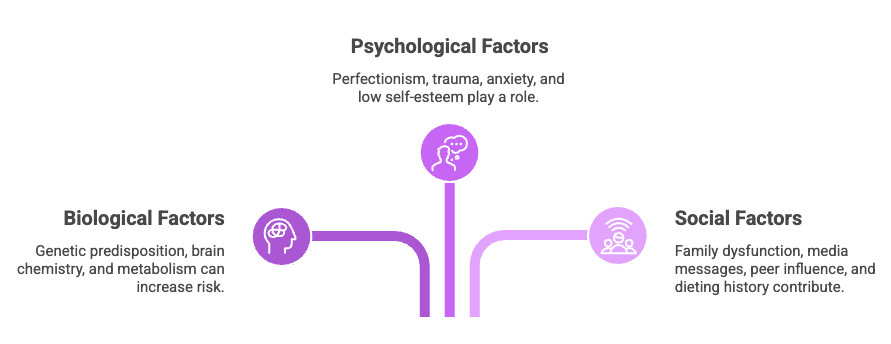
Biological factors:
Genetic predisposition: Heritability ranges from 38-74%. If your parent or sibling has an eating disorder, your risk is significantly higher.
Brain chemistry: Imbalances in serotonin and other neurotransmitters
Metabolism and hormones: Physical factors affecting regulation
Psychological factors:
Perfectionism and need for control
Trauma or abuse history
Anxiety or depression (often co-occurring)
Low self-esteem or appearance-contingent self-worth
Social factors:
Family dysfunction or pressure about weight/appearance
Cultural and media messages about thin ideals
Peer influence and social comparison
Dieting history or weight-focused comments from others
The research: Eating disorders frequently co-occur with mood disorders, anxiety disorders, OCD, obsessive compulsive disorder, and substance use disorders. They also commonly overlap with other mental health conditions and mental disorders, including substance abuse and obsessive-compulsive disorder (OCD), which is one reason treatment often needs to address more than eating symptoms alone.
Important: Risk factors like dieting history, body dissatisfaction, and family eating disorder history increase your odds But having these risk factors doesn’t guarantee an eating disorder — many people with body dissatisfaction never progress to clinical illness.
We want to be clear about something: If you’re struggling with eating or body image concerns, this is not a character flaw or a sign of weakness. The research is unequivocal that eating disorders have strong biological and genetic components. Your brain chemistry, family history, and environmental factors are largely outside your control. What is in your control is recognizing the signs and seeking help. That takes courage, not shame. Coming to therapy because you notice your eating patterns are shifting isn’t “admitting defeat” — it’s being smart and self-aware.
The Role of Social Media
Let's address the obvious: Social media use is associated with increased body dissatisfaction and problematic eating patterns as individuals compare themselves to idealized online images.
Online social comparison is significantly associated with greater body image concerns and eating disorder symptoms, according to a meta-analysis of 83 studies. More striking: there's a dose-response relationship — more time on social media correlates with more eating disorders, especially among young women and transgender/gender-expansive youth.
But here's the nuance: Social media doesn't cause eating disorders. It amplifies negative body image, which is a risk factor. Whether that risk develops into problematic eating patterns or a clinical eating disorder depends on your genetics, psychology, and environment.
The takeaway: If social media is making you feel worse about your body, that's a signal. But it doesn't automatically mean you're developing an eating disorder.
Why This Matters: When to Get Help
Understanding which category you're in matters because it shapes what kind of mental health support you need.
Struggling with body image concerns? You may find our body image blog resources helpful for understanding how research on appearance anxiety applies to everyday life.
Consider therapy (cognitive-behavioral therapy (CBT) or acceptance-based approaches)
Reduce social media consumption or curate your feed
Practice body acceptance exercises to manage body image anxiety
Build self-worth beyond appearance
Engaging in disordered eating patterns? This can include things like rigid food rules or an intense drive to only eat "clean" foods, which may signal orthorexia and an unhealthy obsession with eating clean.
Seek professional mental health evaluation from a therapist or doctor
Notice if eating behaviors are escalating or becoming routine
Don't wait for a full eating disorder diagnosis to get help
Early intervention can stop the progression
Meeting eating disorder criteria? Our practice offers specialized eating disorder treatment grounded in evidence-based approaches for eating disorders.
Seek specialized eating disorder treatment
This requires professional intervention — willpower alone won't resolve eating disorders
Treatment typically includes therapy (Dialectical Behavior Therapy (DBT), CBT, or family-based), medical monitoring, and sometimes medication
About Eating Disorders in Your 20s and 30s
Many people assume eating disorders are a teen problem. They're not. People develop eating disorders throughout their 20s and 30s and beyond, especially during major transitions: moving for work, relationship changes, new jobs. The pressure to look a certain way doesn't disappear at 20.
Additionally, eating disorders that started in adolescence often go undiagnosed into adulthood. You might have been restricting since college but never got an official diagnosis. You might have binged and purged through your 20s privately. Now you're wondering: Is this still "disordered eating," or do I actually have an eating disorder?
This distinction matters because adults sometimes present with eating disorders that look different from the textbook teen version — and they deserve specialized treatment, whether that’s with a generalist or a dedicated eating disorder specialist like Dr. Andrea Castelhano or Lucy Anson, LCSW-C.
The Path Forward
If you recognize yourself in the "disordered eating" or "eating disorder" categories, remember this:
You're not alone. Many in their 20s and 30s are struggling with this.
This is treatable. Eating disorders have high recovery rates with proper treatment.
Getting help early matters. The longer disordered eating patterns persist, the more entrenched they become, especially when they start as seemingly "healthy" weight loss resolutions that can become harmful.
Professional evaluation is important. Expert counseling with a therapist in Baltimore can help you determine which category you're in and what treatment makes sense.
Crisis Resources
If you or someone you know is struggling with an eating disorder or disordered eating, help is available for eating disorders and related mental health concerns:
National Alliance for Eating Disorders (NAED) Hotline 📞 1-866-662-1235 ⏰ Monday-Friday, 9 a.m. to 7 p.m. EST Free, confidential support connecting you with licensed mental health professionals
988 Suicide & Crisis Lifeline 📞 Call or text 988 ⏰ Available 24/7 Free, confidential support for individuals in distress, including eating disorder crises
Love, A Stranger (Text-Based) 📱 Text “NEDA” to 741741 ⏰ Daily, 4–10 p.m. EST The only text-based eating disorder helpline in the U.S., free support from trained volunteers
Substance Abuse and Mental Health Services Administration National Helpline 📞 1-800-662-HELP (4357) ⏰ Available 24/7 Free, confidential support for substance abuse and other mental health concerns, including disordered eating
Crisis Text Line 📱 Text HOME to 741741 ⏰ Available 24/7 Confidential support through text messaging
For additional education and support around eating disorders and body image, the National Eating Disorders Association is also a trusted resource.
Get Professional Support at Baltimore Therapy Group
If you're questioning whether your relationship with food and your body is healthy, you deserve professional guidance. At the Baltimore Therapy Group, our experienced therapists in Baltimore specialize in eating disorders and body image concerns. We can help you determine where you fall on the spectrum and what recovery looks like for you, whether you prefer in-person therapy options near you or online sessions.
Schedule an appointment with one of our eating disorder specialists to begin the conversation, or visit our page on how to schedule therapy in Baltimore for details about starting care.
We serve clients throughout Baltimore, including Roland Park, Canton, Fells Point, Mt. Washington, Federal Hill, and Towson.
Disclaimer: This article is for educational purposes only and is not a substitute for professional mental health advice, diagnosis, or treatment. Always seek the advice of a qualified mental health provider with any questions you may have regarding eating disorders or disordered eating. If you are in crisis or experiencing thoughts of self-harm, please contact 988 or go to your nearest emergency room.