
EMDR Therapy in Baltimore: Heal From Trauma and Emotional Distress
Evidence-Based Treatment for PTSD, Trauma, Anxiety, and Grief

EMDR (eye movement desensitization and reprocessing) is an evidence-based psychotherapy helping individuals process traumatic memories and emotional distress. Developed by psychologist Francine Shapiro in 1989, EMDR therapy effectively treats post-traumatic stress disorder, anxiety, depression, and other mental health conditions. At the Baltimore Therapy Group, we specializes in helping clients heal from trauma with renewed emotional resilience.
Unlike traditional talk therapy, EMDR uses bilateral stimulation—typically eye movements—while you process distressing memories. This allows your brain to reprocess traumatic information, transforming traumatic memories into neutral experiences. Research shows 84-90% of single-trauma victims recover from PTSD after just three sessions, making it a powerful component of our broader trauma therapy services in Baltimore.
What Is EMDR and How Does It Work?
EMDR stands for eye movement desensitization and reprocessing. This psychotherapy method helps your brain process traumatic memories stuck in your nervous system. Unlike traditional therapy relying on talking about trauma, EMDR combines eye movements with attention to traumatic memories, allowing your brain to heal and often complementing other approaches like Cognitive Behavioral Therapy (CBT).
The Adaptive Information Processing model underpins EMDR therapy. Trauma disrupts normal memory storage, leaving memories "frozen" in your nervous system and triggering ongoing emotional distress, anxiety, and depression. EMDR helps your brain complete processing that trauma interrupted and can be part of a broader holistic trauma therapy approach that supports mind, body, and emotional recovery.
Bilateral stimulation—through eye movements, tapping, or auditory cues—is the key mechanism in EMDR sessions. While you focus on a traumatic memory or disturbing event, your therapist guides bilateral stimulation. This simultaneous engaging of both sides of your brain helps process traumatic information, allowing distressing memories to lose their emotional charge.
Major health organizations endorse EMDR as effective. The World Health Organization recognizes EMDR as evidence-based treatment for PTSD. The American Psychiatric Association supports EMDR for trauma. Over 40 controlled studies demonstrate EMDR effectiveness, and these outcomes fit within our practice’s broader commitment to expert counseling in Baltimore.
The Eight Phases of EMDR Therapy
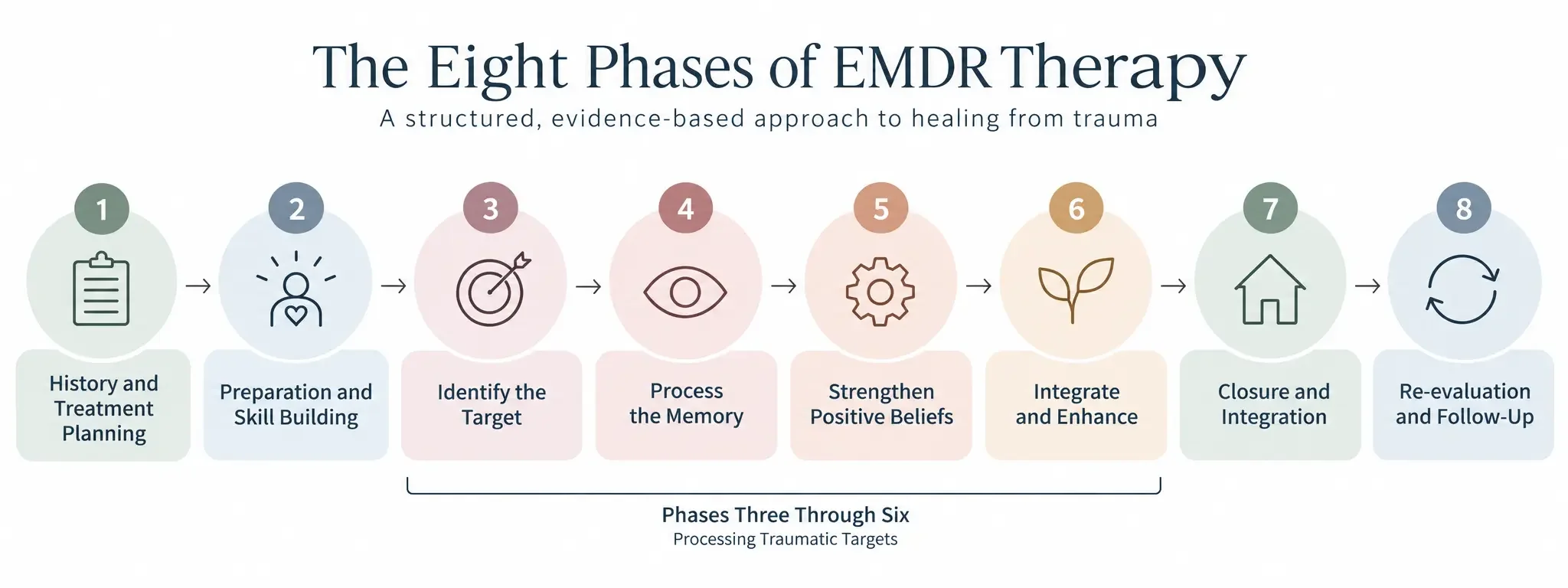
EMDR therapy consists of eight structured phases, ensuring comprehensive treatment planning and systematic processing of traumatic memories.
Phase One: History and Treatment Planning — Your therapist takes detailed history about your trauma, symptoms, and goals. This phase establishes the foundation for your treatment.
Phase Two: Preparation and Skill Building — You learn emotional distress management techniques and coping skills for processing difficult feelings that arise during EMDR sessions. Your therapist ensures you have tools to manage emotional arousal.
Phases Three Through Six: Processing Traumatic Targets — These core phases involve identifying and processing specific traumatic memories and disturbing events. Your therapist guides you through bilateral stimulation while you focus on traumatic memories, negative beliefs, and body sensations associated with trauma.
Phase Seven: Closure and Integration — Between sessions, clients keep a log of related material and upsetting memories that surface during daily life. This allows continued processing outside sessions.
Phase Eight: Re-evaluation and Follow-Up — Your therapist reviews progress and processes any related historical events or trauma that need attention. Additional phases may address other targets as healing progresses.
What Conditions Does EMDR Treat?
EMDR therapy effectively treats multiple mental health conditions:
Trauma and PTSD — EMDR helps individuals with post-traumatic stress disorder recover from traumatic experiences with significant reductions in trauma symptoms and emotional distress.
Anxiety and Phobias — EMDR reduces anxiety and helps overcome phobias and panic disorder by reprocessing fear associated with triggers, and many clients also benefit from individual therapy for anxiety and depression alongside EMDR.
Depression — EMDR benefits depression, particularly when connected to traumatic memories. Processing underlying trauma alleviates depressive symptoms, and we also offer specialized depression therapy in Baltimore for those needing additional support.
Grief and Loss — EMDR helps individuals process complicated grief from death or significant loss, addressing painful emotions and traumatic aspects, and can be integrated with evidence-based grief therapy approaches to support your unique grieving process.
Addiction — EMDR benefits people with addiction by processing underlying trauma and emotional distress, and some individuals also find Dialectical Behavior Therapy (DBT) helpful for building skills to manage cravings and intense emotions.
Personality Disorders — EMDR shows promise for personality disorders by reprocessing traumatic memories and negative beliefs.
What Happens in an EMDR Session?
A typical EMDR session lasts 60 to 90 minutes. Your therapist guides you through specific protocols, though sessions are individualized based on your needs and progress.
During sessions, you identify a specific traumatic memory, disturbing event, or upsetting memory that you want to process. Your therapist helps you focus on this target while simultaneously providing bilateral stimulation through eye movements or other methods. You simply notice what comes up—thoughts, feelings, sensations, images—without trying to control or change anything. Your brain naturally begins reprocessing the memory.
Distressing memories gradually lose their emotional intensity. You may experience shifts in how you perceive the event, what it means about yourself, or the emotional charge it carries. By the end of processing, what once felt traumatic often feels like a neutral memory from the past—something that happened, but no longer causes distress.
Your therapist guides this process carefully, ensuring you remain comfortable and managing emotional distress that may arise. Most clients feel significant relief after a single session, though most trauma requires multiple sessions for complete reprocessing, whether you meet in person or through our secure online teletherapy services.
Research and Effectiveness
Research supporting EMDR therapy is substantial:
84-90% of single-trauma victims recover from PTSD after three EMDR sessions
100% of single-trauma victims are free of PTSD after six sessions
77% of combat veterans are free of PTSD after 12 EMDR sessions
EMDR therapy typically involves 6 to 12 sessions lasting 60 to 90 minutes
Over 40 controlled studies support EMDR effectiveness
EMDR improves trauma symptoms, anxiety, depression, and overall mental health
These dramatic improvement rates exceed other trauma treatments. For many, EMDR offers faster relief than traditional psychotherapy alone.
Is There Controversy With EMDR?
Some debate exists about whether eye movements are necessary. Some researchers question whether bilateral stimulation or therapeutic factors (safe relationship, focused attention on trauma) provide the benefit. However, research consistently shows EMDR with bilateral stimulation produces superior outcomes. Most mental health professionals accept EMDR as evidence-based and effective.
Who Should Consider EMDR?
EMDR benefits anyone experiencing distress from traumatic memories, disturbing events, or traumatic experiences that interfere with daily life. If you have PTSD, anxiety rooted in trauma, depression connected to traumatic events, or grief complicated by trauma, EMDR therapy may help you heal.
EMDR is not appropriate for individuals in active crisis or with untreated psychosis. Your therapist will assess whether EMDR is suitable for your specific situation. Some clients need stabilization and skill-building before beginning EMDR processing, which can include focused DBT skills training to support emotional regulation. Additionally, EMDR works best when you can focus and remain relatively grounded during sessions.
Meet Your Baltimore EMDR Therapist

Justina Stokes, LCSW-C
EMDRIA Certified EMDR Therapist
Licensed Social Worker in Baltimore
Justina is an EMDRIA-certified EMDR therapist specializing in trauma recovery, PTSD, anxiety, and grief. She understands that trauma affects how people feel about themselves and their safety. While traditional talk therapy has value, EMDR helps your brain complete the processing trauma interrupted, allowing genuine healing and recovery.
Justina works with individuals navigating single-incident trauma, complex trauma histories, and grief complicated by trauma as part of our team of experienced therapists in Baltimore. Her approach combines clinical expertise with deep respect for each person's healing journey, creating a safe environment where you can process difficult material and reclaim your life.
Not sure where to start?
Talk to an EMDR therapist in Baltimore who can work with you.
Frequently Asked Questions About EMDR
What exactly happens in an EMDR session?
An EMDR session involves identifying a traumatic memory or disturbing event that causes distress. Your therapist guides your eye movements or provides bilateral stimulation while you focus on this memory. You notice whatever thoughts, feelings, and sensations arise without trying to change anything, much like in psychodynamic psychotherapy or Emotionally Focused Therapy for relationships, where focused attention on emotions and meanings supports deeper healing. Over time, the memory becomes less emotionally charged and your brain reprocesses it as a neutral past experience. Sessions typically last 60 to 90 minutes.
Will I cry during EMDR?
Some clients become emotional during EMDR as they process difficult memories. This is normal and often indicates that emotional processing is occurring. However, not all clients cry, and emotional release isn't required for EMDR to be effective. Your therapist helps you manage emotions and ensures you feel safe throughout treatment.
What is EMDR and how does it work?
EMDR (eye movement desensitization and reprocessing) is a psychotherapy method using bilateral stimulation—typically eye movements—while you process traumatic memories. The therapy works by helping your brain reprocess traumatic information that's stuck in your nervous system. The Adaptive Information Processing model suggests that trauma disrupts normal memory storage; EMDR allows your brain to complete processing. The result: traumatic memories transform into neutral past experiences that no longer cause distress.
Why is there a controversy with EMDR?
Some researchers question whether eye movements are the active ingredient in EMDR or whether other factors (therapeutic relationship, focused attention on trauma) explain the benefit. However, research consistently shows EMDR with bilateral stimulation produces superior results to EMDR without eye movements. Major health organizations endorse EMDR as an evidence-based treatment despite the theoretical debate.
Who is EMDR not appropriate for?
EMDR is not appropriate for individuals in active crisis or with untreated psychosis. Some people with severe dissociation or inability to focus may need preparation before beginning EMDR processing. Your therapist will assess whether EMDR suits your specific situation and may recommend stabilization work first.
When should EMDR not be used?
EMDR should not be used during active psychological crisis or with untreated psychotic symptoms. Additionally, EMDR works best when you can focus and remain grounded during sessions. If you have unstable mental health conditions or are unable to tolerate processing trauma, your therapist may recommend alternative treatments or preparatory work before beginning EMDR.
How many sessions does EMDR typically take?
EMDR therapy typically involves 6 to 12 sessions lasting 60 to 90 minutes. However, some individuals see dramatic improvement in just 3-6 sessions. Timeline depends on the number of traumatic targets, complexity of your trauma history, and your individual healing process. Your therapist discusses expected timeline during initial consultation.
Does research support EMDR?
Yes. Over 40 controlled studies support the effectiveness of EMDR therapy. Research shows 84-90% of single-trauma victims recover from PTSD after three sessions and 100% recovery after six sessions. The World Health Organization and American Psychiatric Association recognize EMDR as an evidence-based treatment for trauma and PTSD.