
When One Partner Won't Go to Therapy: Making Progress on Your Own

You know your relationship needs help. Communication has broken down, conflicts repeat endlessly, or you're growing increasingly distant. You've suggested couples therapy, but your partner has refused. Maybe they don't believe in therapy, think the problems aren't serious enough, or insist that you're the one who needs to change.
So you're left with a difficult question: Can you make meaningful progress on your relationship problems when your partner won't participate in therapy?
The answer is complex. While conjoint couple therapy remains the gold standard for treating relationship distress, individual therapy for couple problems often occurs when one partner refuses conjoint therapy. You can't force your partner into the therapy room, but you can work on yourself—and that work can create real change, even if the outcomes aren't guaranteed.
This guide explains what you can realistically accomplish through individual therapy for relationship issues when your partner won't go, what to focus on, how your changes might affect your relationship, and how to navigate this challenging situation.
Why Won't Your Partner Go to Couples Therapy?
Understanding why your partner refuses therapy can help you approach the situation more effectively. When one partner refuses couples counseling, it often stems from specific fears or beliefs that have nothing to do with the severity of your relationship problems.
Common Reasons Partners Refuse Therapy
They don't think therapy will help. Some people view therapy as unnecessary, ineffective, or only for people with "serious" problems. They may have had negative past experiences with therapy or come from families where therapy was stigmatized.
They think you're the problem. Your partner might believe the relationship issues are entirely your fault and that you're the one who needs to change, not them.
They're afraid of what therapy will uncover. Therapy requires vulnerability. Your partner might fear being judged, having to confront difficult emotions, or discovering problems they're not ready to face. Trust issues with therapists or mental health professionals can also create resistance.
They're overwhelmed by life stress. Work pressures, family obligations, health concerns, or other personal challenges may make therapy feel like one more demand they can't handle.
They think the problems aren't that serious. What feels urgent to you might not feel pressing to your partner. They may minimize the issues or believe time will resolve them naturally.
They're ready to leave the relationship. Sometimes refusal to attend therapy signals that your partner has already mentally checked out of the relationship.
Understanding your partner's resistance doesn't mean accepting it, but it can help you approach the situation with more empathy and clarity about what you're dealing with.
What Can You Actually Work On in Individual Therapy?
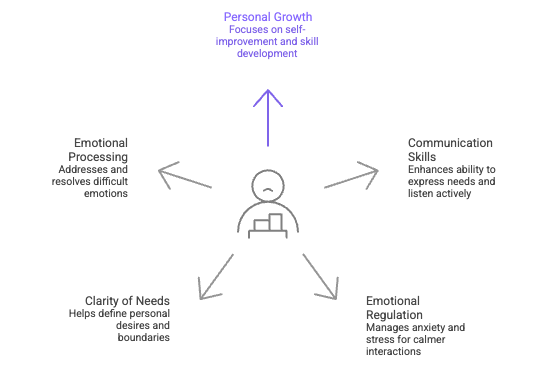
When your partner won't go to couples therapy, individual therapy becomes a safe space to focus on what you can control—yourself. Individual relationship counseling focuses on personal growth and developing the skills and insights that benefit you regardless of your relationship's outcome.
Your Own Patterns and Behaviors
Individual therapy helps you identify your contribution to relationship dynamics. Maybe you withdraw when conflicts arise, become critical when anxious, or pursue reassurance in ways that push your partner away. A therapist can help you see these relationship patterns clearly and understand how your relationship history shapes current behaviors.
This isn't about taking all the blame for relationship problems. It's about recognizing that relationships are systems where both partners influence each other. When you change your patterns, the system shifts, potentially creating space for different interactions with your partner.
Exploring your relationship history—including patterns from your family of origin and past relationships—can reveal why you respond the way you do in your current relationship.
Communication Skills You Can Practice
You can learn and develop communication skills in individual therapy—how to express your needs clearly, listen actively, manage emotions during difficult conversations, and resolve conflicts constructively. Your therapist can help you practice these skills through role-playing and strategizing for specific conversations. Better communication often leads to fewer misunderstandings, even when only one partner has developed these skills.
The reality: You're learning these skills based on your best understanding of your partner rather than real-time practice with them present. But improved communication skills can still change how you interact in your relationship, even if your partner hasn't learned the same skills.
Individual relationship counseling can address your communication style and teach you how to navigate relationship challenges more effectively, even when your partner isn't participating in the therapeutic process.
Emotional Regulation and Stress Management
Individual therapy can teach you how to manage anxiety, depression, or other mental health challenges that affect your relationship. When you can stay calmer during conflicts, maintain emotional balance during stress, and respond rather than react, you create more space for productive interactions. Many people find that individual therapy for depression and anxiety also improves how they show up in their relationships day to day.
This matters even if your partner doesn't change. Your emotional resilience affects how you navigate relationship challenges and whether you can maintain healthy boundaries while staying connected. Building emotional resiliencehelps you respond to relationship problems from a grounded place rather than reacting from anxiety or frustration.
Clarity About What You Want and Need
Sometimes individual therapy's greatest value is helping you gain clarity. What do you actually want from this relationship? What are your needs? What are you willing to accept, and what crosses your boundaries? Are you staying because you want to or because you're afraid to leave?
These questions are difficult to answer when you're caught in the daily struggle of a troubled relationship. Individual therapy provides a safe space to think clearly about these fundamental questions without your partner's reactions influencing your thoughts.
Processing Difficult Emotions
You might be angry at your partner for refusing therapy, hurt by ongoing relationship problems, anxious about the future, or grieving what the relationship isn't. Individual counseling gives you a private space to process these difficult thoughts and emotions without worrying about your partner's reactions.
This emotional processing can help you show up differently in your relationship—less reactive, more grounded, clearer about what you need. When you're feeling stuck in relationship problems, individual therapy can help you move forward even when your partner won't participate.
In our work with clients at the Baltimore Therapy Group, we've found that people struggling with a partner who won't go to therapy often feel stuck between trying harder and giving up. Here's what we tell them: you have a third option—work on yourself. When you focus on your own patterns, communication, and emotional regulation, you're not accepting the status quo or abandoning the relationship. You're doing the work you can actually control. Sometimes that creates openings for your partner to join you; sometimes it gives you clarity about your next steps.
What Are the Key Benefits of Individual Therapy When Your Partner Won't Go?
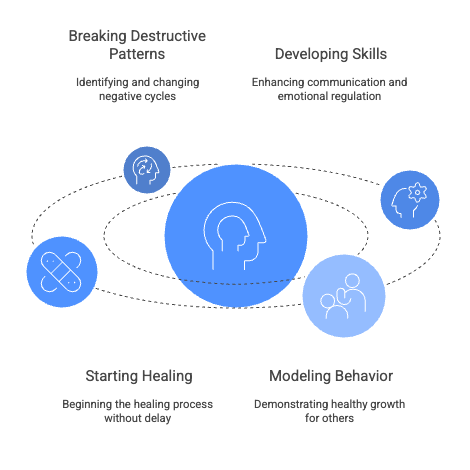
Individual therapy for relationship issues offers specific benefits even when your partner refuses to participate.
You Break Your Own Destructive Patterns
Even if your partner doesn't change, breaking your own contribution to negative cycles matters. Individual relationship therapy helps you identify and change patterns that keep you stuck, regardless of whether your partner is working on their patterns, and many of the essential benefits of relationship counseling still apply even when you're the only one in the therapy room.
You Develop Skills That Serve All Your Relationships
Communication skills, emotional regulation, healthy boundaries, and self-awareness serve you in all relationships—with your partner, children, family members, friends, and colleagues. These are key benefits that extend beyond your current relationship situation.
You're Not Waiting to Start Healing
If you wait for your partner to agree to couples therapy before addressing relationship issues, you might wait indefinitely. Individual therapy lets you start working on yourself now rather than staying stuck while hoping your partner will eventually agree to couples counseling.
You Model Healthy Behavior
Taking responsibility for your own growth and seeking support models healthy behavior for anyone watching—particularly children. You show that it's possible to work on yourself even when others won't join you, whether through ongoing individual work, future couples therapy, or even premarital counseling to build healthy patterns from the start.
What Are the Realistic Limitations?
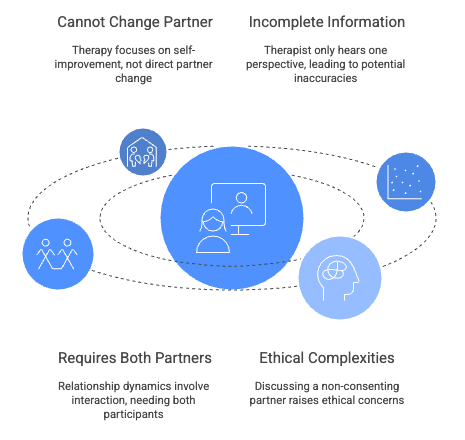
It's important to understand what individual therapy can't accomplish when your partner won't participate.
You Can't Change Your Partner
This is the most fundamental limitation. Individual therapy faces structural constraints on creating relationship change because relationship problems exist in the interaction between partners. You can change yourself, and that might inspire changes in your partner—but it also might not.
Research found that those attending individual-oriented relationship programs reported significant decreases in individual distress but no significant relationship gains. Your personal stress and anxiety might improve while the relationship itself remains troubled.
You're Working with Incomplete Information
Individual therapy creates inaccurate assessments based on single-partner reports. Your therapist only hears your perspective. They don't know what your partner is thinking, feeling, or experiencing in the relationship. This can lead to strategies that don't account for your partner's actual motivations or needs.
The Relationship Dynamic Requires Both Partners
Relationship problems exist in the interaction between partners. Even if you develop better communication skills, healthier emotional responses, and clearer boundaries, these changes happen within a relationship system that involves another person who isn't working on their patterns with professional support.
It's like learning to dance better while your partner continues dancing the old way. You might improve your technique, but the dance itself still requires both of you to work together.
There Are Ethical Complexities
Ethical issues affect both the attending and non-attending partner in individual therapy for couple problems. Your partner isn't consenting to be discussed in therapy, yet they're often the focus. You might share insights from therapy with your partner in ways that create more conflict rather than resolution.
How Your Changes Might Affect the Relationship
When you change, the relationship system changes too—though not always in predictable ways.
Your Partner Might Become Curious
Sometimes when one partner starts making changes in individual therapy, the other partner notices and becomes curious. They might ask what you're learning, what's different about you, or why you're responding differently to old triggers, and may become more open to exploring couples therapy and marriage counseling together.
This curiosity can be an opening. Your partner might become more willing to consider couples therapy when they see that therapy isn't about blame or forcing change, but about growth and understanding.
Your Partner Might Resist Your Changes
Alternatively, your partner might resist the changes you're making. If your new boundaries feel threatening to them, or your different communication style disrupts familiar patterns, they might push back. This resistance can temporarily make things harder before they get better—or might indicate deeper relationship problems, such as unresolved betrayal that may eventually call for specialized affair recovery therapy in Baltimore.
You Might Realize the Relationship Isn't Healthy
Individual therapy might help you see relationship dynamics you couldn't see before. You might recognize patterns of control, manipulation, or emotional harm. You might realize you've been accepting unacceptable behavior because you didn't know it was unacceptable.
This clarity is valuable even if it's painful. Understanding what's actually happening in your relationship helps you make informed decisions about your future.
The Relationship Might Improve Without Your Partner in Therapy
It's possible—though not guaranteed—that your changes alone might improve the relationship. When you communicate more clearly, maintain better boundaries, manage your emotions more effectively, and respond rather than react, your partner might respond positively to these changes. Personal growth can lead to more fulfilling connections, even when only one partner is actively working on themselves.
Many clients report this experience, though it's important not to count on it. The relationship might improve, or it might not. Your personal growth is valuable regardless of whether your partner changes.
We see this frequently: one partner starts individual therapy while the other refuses couples work, and the relationship begins shifting in unexpected ways. Sometimes the partner becomes curious about the changes they're seeing and eventually agrees to couples therapy. Sometimes the person in therapy gains clarity that the relationship isn't healthy. Both outcomes represent important growth. We help clients stay open to either possibility rather than pinning all their hopes on one specific outcome. That flexibility is essential when only one partner is willing to do the work.
Strategies for Making Progress When Your Partner Won't Go
If you're pursuing individual therapy while your partner refuses couples work, these strategies can help:
Focus on Your Circle of Control
Concentrate your energy and therapy time on what you can actually control—your behaviors, responses, communication, boundaries, and emotional regulation. Let go of trying to figure out how to change your partner or make them see things your way.
This isn't giving up. It's focusing your efforts where they can actually make a difference.
Keep the Door Open for Couples Therapy
Let your partner know that you're working on yourself in individual therapy, but you still believe couples therapy would be valuable. Make it clear you're not trying to "fix" them or prove they're wrong—you genuinely want to work on the relationship together. Couples counseling or relationship therapy might become options when your partner sees your commitment to growth.
Some partners become more willing over time, especially when they see that individual therapy is helping you rather than making you more critical of them.
Be Transparent About Your Growth
When appropriate, share what you're learning in therapy with your partner. Not to lecture them or imply they need to change, but to communicate that you're working on yourself and want the relationship to improve.
This transparency can reduce suspicion that therapy is making you want to leave or that your therapist is "taking your side" against them.
Practice New Skills in Low-Stakes Moments
Don't wait for a major conflict to try out your new communication skills or emotional regulation techniques. Practice them in everyday interactions. This builds your confidence and shows your partner that you're genuinely changing, not just trying to win arguments.
Prepare for Both Outcomes
Individual therapy might lead to a better relationship, or it might lead to clarity that the relationship isn't healthy for you. Both outcomes represent growth. Prepare yourself emotionally for either possibility rather than investing everything in one hoped-for result; if you and your partner later become open to structured support in deciding your path, discernment counseling in Baltimore can help you explore those options thoughtfully.
Know When Professional Help Is Needed for Safety
If there's domestic violence, abuse, or serious safety concerns in your relationship, individual therapy is appropriate but couples therapy is not. Make sure your therapist knows about any safety issues so they can help you develop appropriate safety plans.
From a clinical perspective, individual therapy when your partner won't go works best when you maintain realistic expectations. We ask clients to focus on their own growth rather than trying to figure out how to change their partner through therapy. We help them develop communication skills, set healthy boundaries, and process difficult emotions—all things they can control. When clients stop trying to manage their partner's willingness to change and instead focus on their own patterns, they make meaningful progress regardless of whether their partner eventually joins them in couples work.
When Individual Therapy Might Lead to Couples Work
Individual therapy can sometimes serve as a bridge to eventual couples therapy.
Your Partner Sees Your Growth
When your partner notices positive changes in you—you're calmer, more communicative, less reactive—they might become more open to therapy. They see that therapy isn't about blame but about growth, and learning what to expect from marriage counseling can reduce some of the fears that keep people from trying couples work.
Your Therapist Recommends Couples Work
As you make progress in individual therapy, your therapist might recommend transitioning to couples therapy if your partner becomes willing. They can help you approach this conversation with your partner effectively and point you toward resources that explain how couples therapy typically works.
Life Circumstances Change
Your partner might refuse therapy now but be more open later when stress decreases, life stabilizes, or relationship problems become more pressing to them. Keeping the door open means you're ready when circumstances change.
You Set a Boundary That Creates Motivation
Sometimes setting a clear boundary—"I need us to try couples therapy or I need to reconsider this relationship"—creates motivation for your partner to participate. This should be a genuine boundary, not a manipulation tactic, and only when you're prepared to follow through.
What If the Relationship Doesn't Improve?
Individual therapy when your partner won't go might not save your relationship—and that's okay.
The Value of Personal Growth
Even if your relationship doesn't improve, the personal growth you achieve in individual therapy is valuable. You develop better communication skills, emotional regulation, self-awareness, and healthy boundaries. These serve you in all your relationships, present and future.
Clarity Is Valuable
Understanding what you need, what you're willing to accept, and what's actually happening in your relationship is valuable even if it's painful. Clarity helps you make informed decisions about your life, including whether to stay, separate, or seek divorce counseling in Baltimore for support through that transition.
You're Modeling Healthy Behavior
If you have children, working on yourself in therapy models healthy behavior. You're showing them that people can work on their challenges, seek support, and take responsibility for their personal growth. Family therapy may eventually become an option if relationship issues are affecting your children, and connecting with a practice like the Baltimore Therapy Group, which is accepting new patients, can give your whole family access to that support.
Both Outcomes Can Be Healthy
A relationship that improves because one partner grew in individual therapy is a positive outcome. A relationship ending because you gained clarity that it wasn't healthy is also a positive outcome. The goal isn't necessarily to save the relationship—it's to become healthier yourself.
Getting Help at the Baltimore Therapy Group
If your partner won't attend couples therapy but you're committed to working on yourself and navigating your relationship challenges, individual therapy can provide support.
At the Baltimore Therapy Group, our experienced therapists in Baltimore understand the unique challenges of working on relationship issues when your partner won't participate in couples work. We provide a safe space where you can explore your patterns, develop communication skills, process difficult emotions, and gain clarity about your relationship—all while respecting the reality that you can only control yourself.
Located in Towson, Maryland, we serve clients throughout Baltimore, Roland Park, Fells Point, Canton, Mt. Washington, and surrounding areas. We offer both in-person sessions and online therapy, giving you flexibility in how you access mental health support, and you can schedule therapy appointments in Baltimore in whatever format works best for you.
You can't force your partner into therapy, but you can work on yourself—and that work matters. Whether it leads to a healthier relationship, clarity about leaving, or simply better emotional regulation and communication skills that serve you regardless of this relationship's outcome, individual therapy when your partner won't go is valuable.
If you're ready to work on yourself and navigate your relationship challenges with professional support, schedule an appointment to speak with one of our experienced therapists.
Disclaimer: This article is for educational purposes only and is not a substitute for professional medical advice, diagnosis, or treatment. Always seek the advice of your physician or qualified mental health provider with any questions you may have regarding a medical condition or mental health concern. If you are in crisis or experiencing thoughts of self-harm, please call 988 (Suicide and Crisis Lifeline) or go to your nearest emergency room.