
When to Seek Help for Sexual Performance Anxiety: Signs You Need Professional Support
Most men experience some nervousness about sex at some point—before a first intimate encounter with a new partner, after a period of stress, or when life feels overwhelming. This kind of occasional anxiety is normal and usually passes on its own.
But what happens when that anxiety doesn't go away? What if worry about your sexual performance has become a constant presence in your intimate life, affecting not just sex but your confidence, your relationship, and your overall well-being? How do you know when sexual performance anxiety has crossed the line from normal jitters to something that needs professional attention?
Many men struggle with this question, often waiting months or even years before seeking help because they feel embarrassed, think the problem will resolve itself, or don't know that effective treatment exists. Understanding when sexual performance anxiety warrants professional support—and knowing what kind of help is available—can be the first step toward reclaiming your sex life and confidence.
This guide explains the signs that indicate you should seek professional help, what makes sexual performance anxiety different from normal sexual concerns, and what to expect when you reach out for support.
What Is Sexual Performance Anxiety?
Sexual performance anxiety is worry or fear about your ability to perform sexually. Performance anxiety, specifically the fear of failure during intercourse, is an important psychogenic factor in erectile dysfunction. Sexual performance anxiety can lead to erectile dysfunction by interfering with the body's natural sexual response.
This anxiety can manifest as:
Fear of not getting or maintaining an erection during sexual intercourse
Worry about ejaculating too quickly (premature ejaculation) or taking too long to ejaculate
Concern about satisfying your sexual partner
Self-consciousness about your body during sex
Racing thoughts during sexual activity that pull you out of the moment
Research shows that anxiety in sexual situations leads to attentional focus on sexual performance at the expense of erotic cues, compromising sexual arousal. When you're worried about how you're performing, your mind isn't focused on pleasure and connection—it's focused on monitoring and evaluation.
Anxiety triggers the body's stress response, which affects blood flow and the nervous system in ways that interfere with sexual arousal. When the nervous system is in fight-or-flight mode, blood vessels constrict rather than dilate, making it harder to achieve or maintain an erection.
How Common Is Sexual Performance Anxiety?
If you're experiencing sexual performance anxiety, you're far from alone. Many men experience performance challenges at some point in their lives, and individual therapy for depression and anxiety can be an important part of addressing the broader emotional impact. Studies examining men and women found that sexual performance anxiety affects both partners, with men more likely to report performance-related concerns and higher sexual performance anxiety linked to higher sexual distress and lower sexual and relationship satisfaction.
Sexual performance anxiety is closely connected to erectile dysfunction. A systematic review found that the median prevalence of erectile dysfunction in men with anxiety disorders was 20.0%, indicating that men with anxiety disorders are at high risk of developing erectile dysfunction ED.
Research on young men with erectile dysfunction found that within 12 months preceding ED diagnosis, prevalence of depression and anxiety was 17.1% in cases versus 12.9% in controls. This suggests a temporal relationship where anxiety often precedes sexual difficulties.
Another study found that 12.5% of men with ED or PE had comorbid depressive disorders and 23.4% had anxiety disorders, with these disorders predating sexual dysfunction onset in the majority of patients. Mental health conditions often coexist with sexual problems, creating a complex interplay that requires professional attention.
The point is this: Sexual performance anxiety is common, it often co-occurs with mental health conditions, and it's treatable. You don't have to struggle with this alone.
When Does Sexual Anxiety Become a Problem That Needs Help?
Normal sexual nervousness is temporary and situational. Performance anxiety becomes a problem requiring professional help when it meets certain patterns.
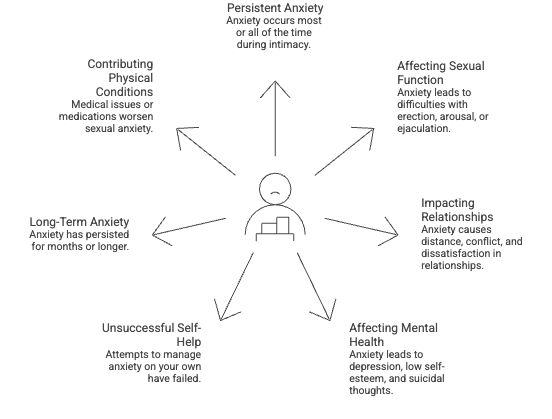
It's Persistent Rather Than Occasional
Seek help if: Your anxiety about sexual performance occurs most or all of the time you're intimate, not just occasionally. If you find yourself dreading sex or avoiding intimate situations because of worry about performance, the anxiety has become persistent enough to warrant professional support.
It's Affecting Your Sexual Function
Seek help if: The anxiety is contributing to actual sexual difficulties—trouble getting or maintaining an erection, premature ejaculation, delayed ejaculation, or difficulty with arousal. Research shows that medical factors and current psychological factors, particularly performance anxiety, were most strongly associated with each male sexual difficulty. Sexual performance anxiety can cause erectile dysfunction and other sexual problems even when no physical health condition is present.
Even if the sexual difficulty started for physical reasons (medication side effects, health condition, fatigue), performance anxiety can maintain or worsen the problem long after the original cause has resolved. This creates a vicious cycle where anxiety causes sexual difficulties, which increases anxiety, which worsens the difficulties. The physical and psychological factors interact, making it harder to enjoy sex or maintain sexual performance.
It's Impacting Your Relationship
Seek help if: Sexual performance anxiety is creating distance in your relationship, causing conflict, or affecting your partner's satisfaction and well-being. Higher sexual performance anxiety was linked to higher sexual distress and lower sexual and relationship satisfaction in both individuals and their partners, demonstrating that this affects both of you. Relationship problems can both contribute to and result from sexual performance anxiety.
Signs of relationship impact include:
Avoiding intimacy to avoid the anxiety
Feeling disconnected from your partner
Your partner expressing frustration or concern
Relationship stress related to sexual issues
Decreased emotional intimacy alongside decreased physical intimacy
Difficulty to talk openly about sexual concerns with your partner
It's Affecting Your Mental Health and Self-Esteem
Seek help if: Performance anxiety is causing significant distress beyond just the bedroom. Men with erectile dysfunction or premature ejaculation had elevated rates of depression and anxiety, with men with comorbid depression having significantly elevated rates of suicidal ideation related to their sexual dysfunction. Choosing expert counseling in Baltimore can help you address both the sexual concerns and the underlying mood or anxiety symptoms.
Warning signs include:
Low self-esteem or self-confidence related to sexual concerns
Self-doubt about your masculinity or adequacy as a partner
Feeling embarrassed or ashamed about your sexual difficulties
Avoiding dating or new relationships because of performance fears
Symptoms of depression or anxiety extending beyond sexual situations
The problem affecting your self-worth or identity as a man
If you're experiencing suicidal thoughts related to sexual difficulties, this is a medical emergency. Please call 988 (Suicide and Crisis Lifeline) or go to your nearest emergency room immediately.
You've Tried to Address It on Your Own Without Success
Seek help if: You've attempted to manage the anxiety on your own—through relaxation techniques, communication with your partner, lifestyle changes—but the problem persists or worsens. Anxiety concerning sexual performance or relationship issues is the critical element in sexual avoidance patterns, and professional intervention may be necessary to break this cycle.
It's Been Going On for Months
Seek help if: The performance anxiety has persisted for several months or longer. While brief periods of sexual anxiety related to specific stressors (job change, health scare, relationship transition) may resolve on their own, anxiety lasting months indicates a pattern that's unlikely to spontaneously improve.
Physical Health Conditions Are Contributing
Seek help if: You have medical conditions that affect sexual function (diabetes, cardiovascular disease, hormonal issues) or take medications that impact sexual performance. Even when physical factors contribute to sexual difficulties, performance anxiety can develop as a maintaining factor that persists after the medical issue is addressed or medication is adjusted.
Professional support can help you address both the physical and psychological components simultaneously for better outcomes. Understanding the underlying cause—whether primarily physical, psychological, or a combination—is essential for effective treatment.
In our work with clients at the Baltimore Therapy Group, we've found that men often ask, "Is my situation serious enough to warrant therapy?" Here's what we tell them: if sexual performance anxiety is causing you distress, affecting your relationship, or limiting your intimate life, that's enough. You don't need to hit rock bottom before seeking help. The men who benefit most from therapy are often those who reach out early, before the anxiety becomes deeply entrenched and the avoidance patterns become automatic.
What Prevents Men from Seeking Help?
Despite effective treatments being available, many men delay seeking help for sexual performance anxiety. Understanding these barriers can help you overcome them and consider options like Baltimore Therapy Group, which is accepting new patients.
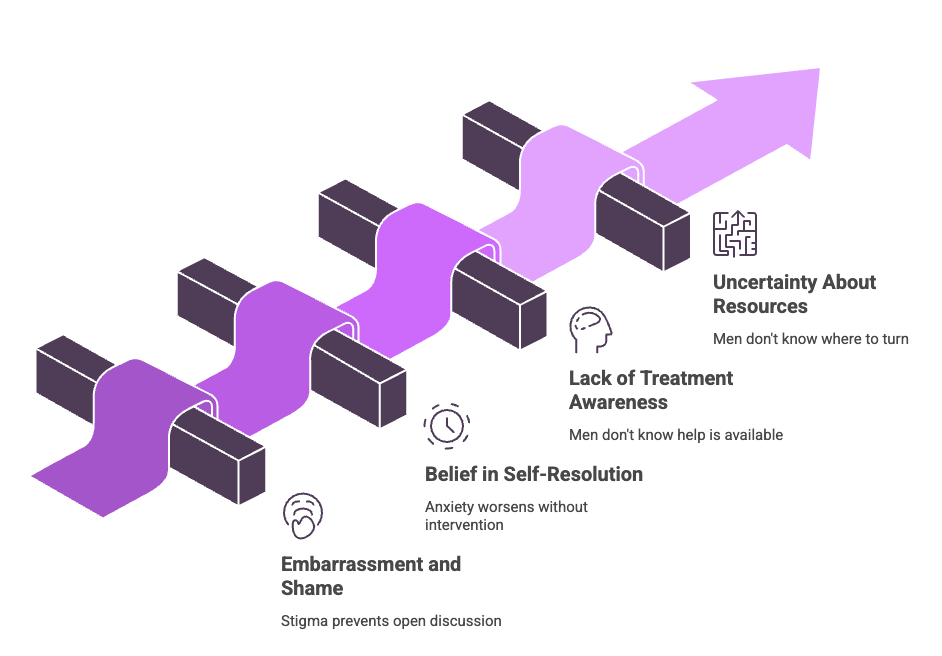
Embarrassment and Shame
Sexual difficulties carry stigma that makes many men feel embarrassed to discuss them. A pilot study found that only 59% of men referred to sex therapy attended their initial consultation, suggesting that barriers prevent many from accessing care even after receiving a referral.
The reality: Sex therapists and mental health professionals who specialize in sexual health hear about these concerns every day. What feels uniquely embarrassing to you is something they're trained and experienced in treating. They approach these issues with professionalism, compassion, and without judgment.
Belief That the Problem Will Resolve on Its Own
Some men wait, hoping performance anxiety will simply go away with time. While occasional sexual anxiety may resolve, persistent performance anxiety often worsens without intervention because anxiety creates a self-reinforcing cycle.
The reality: The longer performance anxiety persists, the more entrenched the pattern becomes. Early intervention typically leads to faster improvement and better outcomes.
Not Knowing That Treatment Works
Many men don't realize that sexual performance anxiety is highly treatable with evidence-based approaches. Therapy can help address the psychological factors while medical treatment can address any physical components, especially when you work with experienced therapists in Baltimore.
The reality: Research demonstrates that treatment works. A meta-analysis found that combined treatment (psychological intervention plus medication) was more efficacious for erectile dysfunction symptoms than medication or psychological intervention alone. Studies show psychosocial interventions improved sexual functioning in men, with cognitive-behavioral treatment programs being particularly effective. Behavioral therapy specifically addresses the thought patterns and behaviors that maintain sexual performance anxiety.
Uncertainty About Where to Get Help
Men often don't know who to see for sexual performance anxiety—a doctor? A therapist? A specialist?
The reality: Multiple pathways exist. You can start with your primary care physician, who can conduct a physical exam to rule out medical conditions and review your medical history. Clinical guidelines recommend that clinicians should consider referring men diagnosed with premature ejaculation to a mental health professional with expertise in sexual health. You can also directly seek out a sex therapist or mental health professional who specializes in sexual concerns or schedule therapy in Baltimore to talk with a licensed provider about next steps.
We often see men who've waited years before scheduling their first appointment, and they almost always say the same thing: "I wish I'd done this sooner." The anticipation of talking about sexual concerns is usually worse than the actual conversation. Once men realize they can discuss these issues openly without judgment—that we approach sexual health the same way we approach any other health concern—the embarrassment fades. Taking that first step is often the hardest part, but it's also the most important one.
What Qualifies Someone as a Sex Therapist?
When seeking help for sexual performance anxiety, you'll want to work with someone qualified to address these concerns. A sex therapist specializes in sexual medicine and sexual dysfunction, with training that goes beyond general mental health practice.
A qualified sex therapist typically has:
A graduate degree in psychology, social work, marriage and family therapy, or a related mental health field
Additional specialized training in human sexuality and sex therapy
Licensure in their state to practice psychotherapy
Often certification from organizations like the American Association of Sexuality Educators, Counselors and Therapists (AASECT)
What they're trained to address:
Psychological factors affecting sexual function
Relationship dynamics that impact sexual satisfaction, which sometimes benefit from family therapy in Baltimore
Communication about sex and intimacy
Behavioral interventions for sexual difficulties
Integration of medical and psychological treatment when needed
What to Expect in Sex Therapy
Understanding what happens in sex therapy can reduce anxiety about seeking help.
Initial Assessment
Your first session typically involves a comprehensive assessment where the therapist will ask about:
Your sexual history and current concerns
Medical history and any health conditions
Relationship history and current relationship dynamics
Mental health history (depression, anxiety, trauma)
When the performance anxiety started and what makes it better or worse
This conversation happens in a confidential, non-judgmental setting. Sex therapists are trained to discuss these topics matter-of-factly and professionally.
Partner Involvement
Guidelines emphasize that both partners should be willing to participate and cooperate with therapy, as sexual difficulties are typically a couple's issue. Research confirms that premature ejaculation is typically a couple's problem and psychotherapy is best when the partner is involved. Learning to talk openly with your partner about sexual concerns is often a key component of treatment.
However, if you're not in a relationship or your partner is unable or unwilling to participate, individual therapy can still be highly effective.
Treatment Approaches
Evidence-based treatments for sexual performance anxiety typically include:
Cognitive-Behavioral Therapy (CBT): Addresses the thoughts and beliefs that fuel performance anxiety, helps develop healthier thought patterns, and includes behavioral techniques to gradually reduce anxiety. Behavioral therapy helps you change the specific behaviors and thought patterns that contribute to sexual performance anxiety.
Education: Provides accurate information about sexual function, arousal, and common sexual concerns to correct misconceptions that may fuel anxiety. Understanding how the body and nervous system work during sexual activity can reduce anxiety.
Communication Skills: Teaches you (and your partner, if involved) how to talk openly about sex, desires, concerns, and needs.
Behavioral Exercises: May include sensate focus (structured touching exercises that reduce performance pressure) and other techniques to help you reconnect with pleasure rather than focusing on performance.
Relaxation and Mindfulness: Techniques to manage anxiety and stay present during sexual activity rather than being pulled into racing thoughts, whether you're attending sessions in person or using teletherapy and online therapist services.
Combination Approaches
For some men, combining therapy with medical treatment offers the best outcomes. Research shows combined treatment (psychological intervention plus medication) produced the highest response rates for erectile dysfunction, with better outcomes than either approach alone. Therapy can help you address the psychological components while medication addresses blood flow and other physical responses.
Your therapist may work collaboratively with your physician to coordinate care when appropriate, and you can explore in-person therapy options near you if you prefer to meet face to face.
From a clinical perspective, we see significant improvement when men understand what's happening and why. Sexual performance anxiety isn't a character flaw or personal failing—it's a treatable condition with well-established interventions. Most men experience noticeable progress within a few weeks of starting therapy, especially when they're willing to practice the techniques we discuss. The combination of understanding the cycle, learning new skills, and having professional support creates momentum toward lasting change. You don't have to figure this out alone.
Getting Help at the Baltimore Therapy Group
If you recognize the signs that sexual performance anxiety has become more than occasional nervousness—if it's affecting your sexual function, your relationship, your mental health, or your quality of life—professional support can help.
At the Baltimore Therapy Group, our therapists understand the complex interplay of psychological, relational, and physical factors that contribute to sexual performance anxiety. We provide evidence-based therapy in a confidential, non-judgmental environment where you can openly discuss these concerns.
Located in Towson, Maryland, we serve clients throughout Baltimore, Roland Park, Fells Point, Canton, Mt. Washington, and surrounding areas. We offer both in-person sessions and online therapy, giving you flexibility in how you access mental health care, including specialized support such as perinatal mental health services.
You don't have to continue struggling with performance anxiety alone. Sexual performance anxiety is treatable, and seeking help is a sign of strength, not weakness. Whether you're experiencing erectile dysfunction, premature ejaculation, or anxiety that's affecting your sex life in other ways, therapy can help you break the cycle of performance anxiety and reclaim sexual confidence and satisfaction.
If you're ready to address sexual performance anxiety and explore treatment options, schedule an appointment to speak with one of our experienced therapists.
Disclaimer: This article is for educational purposes only and is not a substitute for professional medical advice, diagnosis, or treatment. Always seek the advice of your physician or qualified mental health provider with any questions you may have regarding a medical condition or sexual health concern. If you are in crisis or experiencing thoughts of self-harm, please call 988 (Suicide and Crisis Lifeline) or go to your nearest emergency room.