
GLP-1s Changed How We Talk About Body Image — But Did They Change How We Feel About It?
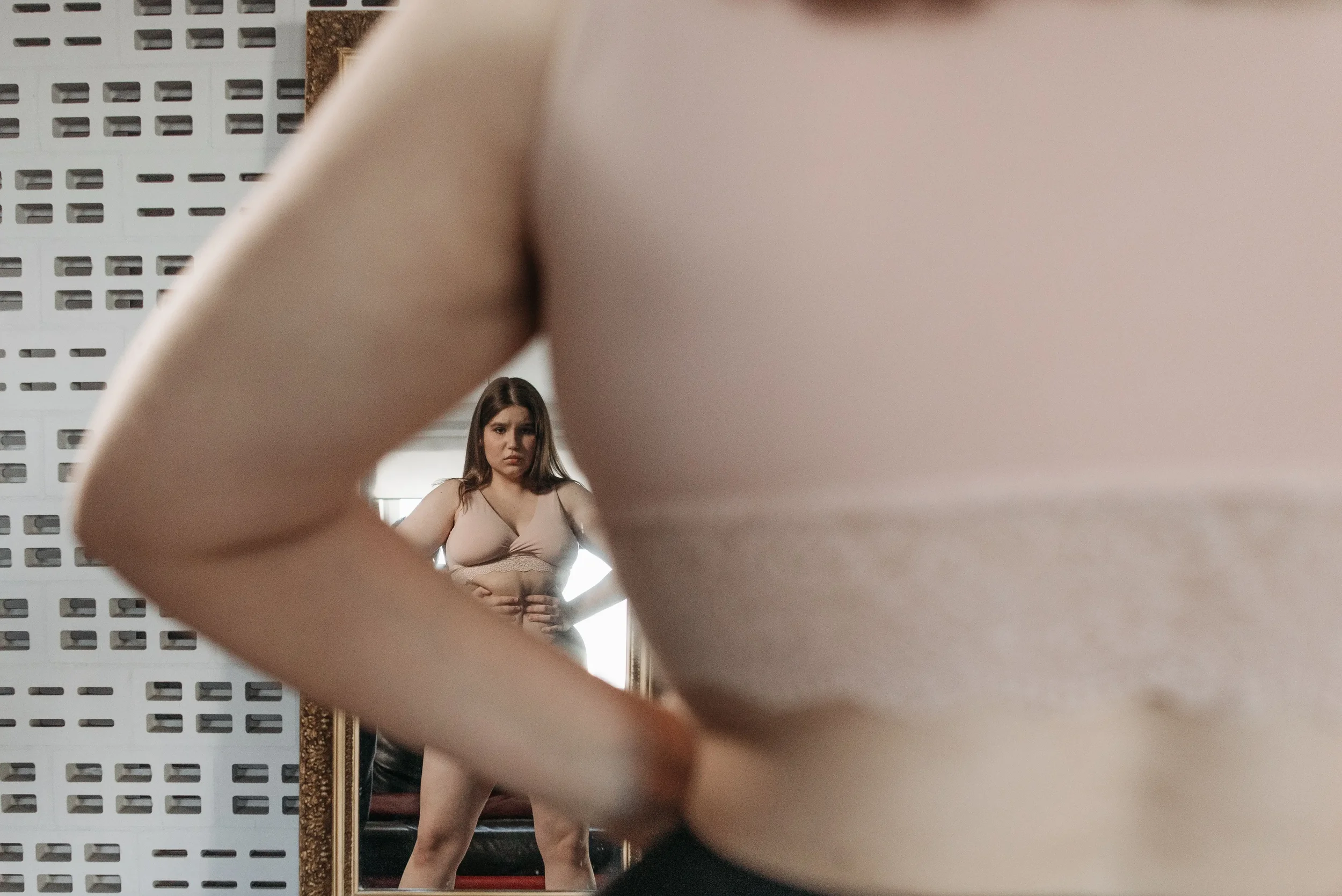
Body image is the psychological relationship you have with your body — how you perceive it, think about it, and feel about it — and it can range from healthy body appreciation to serious distress, including conditions like body dysmorphic disorder. Semaglutide. Tirzepatide. Ozempic. Whatever you call them, these medications have reshaped the cultural conversation around weight, bodies, and beauty in a few short years. Celebrities discuss them openly. Social media feeds are full of before-and-after posts. The implicit message — that significant weight reduction is now accessible, expected, and aspirational — has landed in every scrolling session of every person paying any attention to their appearance at all.
Which is most of us.
If you're struggling with body dissatisfaction, feeling unsettled by weight changes, or wondering whether pressure around appearance is affecting your mental health, this is the question worth asking: not just what these medications are doing to waistlines, but what they're doing to how people feel about their own bodies. We'll look at the body image continuum, the difference between common and clinical levels of distress, how GLP-1 weight loss medications can shape body image, what healthy body image and body image flexibility actually look like, and when it may be time to seek professional support. Persistent negative feelings about your body can erode self-esteem, fuel anxiety or depression, and interfere with daily life, which makes it worth understanding where your experience falls and what kind of help may be useful.
The Body Image Continuum: What's Normal, What's Not
Body image isn't a single thing. It's a layered construct that includes how you perceive your physique, how you think and feel about it, and how those thoughts and feelings shape behavior. Body image concern exists on a continuum from healthy body image to clinical psychiatric disorder.
Understanding where you — or someone you care about — falls on that continuum is one of the most practically useful things you can do for mental health. Body image research consistently shows that negative body image and positive body image are not simply opposites — and that body positivity isn't just the absence of negative feelings about your body.
Normative body dissatisfaction
The uncomfortable truth is that many people experience negative body image, and girls are more likely than boys to have a negative body image. Studies find that 35% to 81% of girls report body dissatisfaction, while 16% to 55% of boys experience body dissatisfaction. A 15-year study of 1,455 individuals found that nearly 95% experience stable body dissatisfaction from adolescence onward — suggesting that once established, dissatisfaction with one's physique tends to persist rather than resolve on its own.
This prevalence doesn't make it benign. Negative body image that becomes chronic lowers body satisfaction across the lifespan. People who feel unhappy about their bodies consistently over time show higher rates of low self esteem, depression, and anxiety — and lower quality of life. This pattern cuts across gender identity, body types, and demographic backgrounds. Over half of LGBTQ+ individuals feel anxious about their bodies, and affirming mental health therapy for LGBTQ people can be an important protective factor. Weight and shape concerns now link more strongly to depression than in previous years — a factor in declining adolescent mental health. Normative doesn't mean harmless.
When negative body image becomes concerning
Body image moves from normative discontent into clinical territory along several dimensions, and working with experienced therapists in Baltimore can help clarify where you fall on that spectrum:
Time. In body dysmorphic disorder (BDD), preoccupation with perceived appearance flaws occupies 3–8 hours per day. Concern that occupies significant mental bandwidth daily — interrupting work, relationships, or daily life — is a flag worth taking seriously.
Behavior. Checking behaviors (repeated mirror examination, measuring circumferences, photo comparison) and avoidance behaviors (refusing to be photographed, avoiding social situations, wearing concealing clothing regardless of context) indicate that body image concerns have moved into behavioral territory, and can also show up in eating habits, chronic restrictive dieting, or over-exercising.
Impairment. The clearest clinical marker is functional impairment — when how you feel about your physique interferes with your work, relationships, or ability to function normally.
The key differentiator between subclinical and clinical body image issues is that clinical-level negative thoughts and behaviors are accompanied by significant distress and functional impairment, often including compensatory behaviors like chronic restrictive dieting or over-exercising. The presence of distress alone doesn't make something clinical; the question is whether it's getting in the way. Body dysmorphia sits at the more severe end of this spectrum.
Body dysmorphic disorder and eating disorder: the clinical end of the spectrum
BDD — sometimes called body dysmorphia — affects approximately roughly 2% of adults, is chronically underdiagnosed, and involves intense preoccupation with perceived flaws that are not observable by others. A crucial clinical note: patients with BDD frequently seek cosmetic surgery or dermatological procedures rather than mental health care — and rarely experience symptom improvement after these interventions. The desire to change one's physique is not the same as improving how one feels about it.

What GLP-1s Are Adding to an Already Complex Picture
GLP-1 medications arrived into a body image landscape that was already strained. They didn't create body dissatisfaction — but they've changed several of the inputs that feed it.
New social comparison pressures
Social media appearance-ideal images causally worsen body image. Research shows many people compare themselves to media images, and 87% of women report doing so. Instagram has also been ranked most detrimental to mental health. Weight loss medications have dramatically increased the volume of before-and-after transformation content on social media. This creates a new category of appearance-ideal imagery: accessible, credentialed by medicine, and presented as achievable in real life.
The message this sends — especially to people already prone to upward social comparison — is that not pursuing medically facilitated weight loss is a choice to remain in a less ideal physique. For young women and teenage girls already absorbing unrealistic images and narrow beauty ideals through social media, this adds another layer to existing negative attitudes toward their own bodies. That pressure is reinforced by posting culture: 50% of men edit images before posting on social media, and 35% of respondents worry about unattractive photos online. 46% of teenagers report that social media makes them feel worse about their bodies; the era of medically facilitated weight loss adds a new layer to that pressure.
The "new body, same brain" problem
One of the least-discussed findings in the research on these medications is that rapid, significant weight loss doesn't automatically produce positive body image. Body image is a psychological construct tied to a person's body image, not just changes on the scale or in a person's body. People can lose substantial pounds and still experience deep dissatisfaction — because the the underlying cognitive and emotional patterns haven't shifted.
This is particularly relevant for people who start weight loss medications with pre-existing body image concerns or disordered eating patterns. These medications can change a person's body without necessarily changing how that person feels about it. For some people, rapid weight loss can actually intensify scrutiny — moving attention to loose skin, changes in physical appearance, or new perceived flaws that weren't salient before. This isn't failure. It's the 'new body, same brain' problem: the negative thoughts and body ideals that drove dissatisfaction don't automatically update when the scale does, and some people remain distressed even at a healthy weight or around average weight, no matter how a person feels they should look.
Changing beauty ideals — not necessarily improving them
GLP-1s have also narrowed what counts as an acceptable physique in some social circles. These medications have made thinness more attainable for a broader demographic, which can perversely increase the pressure on people who aren't losing weight — whether because they're not on these medications, not responding, or simply choosing not to — to explain or justify their size, while also affecting people who need to gain weight to support their health.
For adolescents especially, this cultural shift lands during the developmental period when appearance-related patterns are most formative and tends to be most stable in its developmental trajectory. Discrimination tied to race and body size can also shape how these ideals are absorbed, making beauty pressure unevenly distributed.
From the Therapist
"We're seeing something in practice the research hasn't fully caught up to: clients who began weight loss medications expecting to feel better about their bodies, and are surprised to find it more complicated. Some do feel better. Others lose weight and find a new set of concerns. Others land in social comparison spirals that are more intense, not less, because the standard has moved. The medication changes the physique. Therapy addresses how you feel about it."
What Healthy Body Image Actually Looks Like
Positive body image is not simply the absence of negative feelings about your appearance. body appreciation is inversely linked to eating pathology, depression, and anxiety — even after controlling for negative body image. It's a distinct, protective construct.
expert consensus identifies five distinct components of positive body image:
Body appreciation — holding favorable attitudes toward your physique regardless of appearance
Body acceptance — accepting yourself as you are, including perceived imperfections
Broadly conceptualizing beauty — recognizing diverse forms of beauty beyond narrow cultural ideals
Adaptive body investment — engaging in body care motivated by health and well-being, not appearance correction, including healthy eating and physical activity
Protective filtering — processing appearance-related information in a self-protective way
These aren't aspirational ideals so much as practical skills — and each is buildable through therapy, self compassion practice, and deliberate self care. research shows online programs for eating disorder prevention can reduce body dissatisfaction. In practice, healthy body image means appreciating one's body as it is, even on a bad body image day, without it derailing your functioning. Body confidence doesn't mean loving every part of your appearance; it means self acceptance and a positive relationship with one's body — holding your physical appearance lightly enough to engage fully in daily life. You can engage with social media without your self-worth rising and falling with what you see. You can notice positive things about your physique alongside its imperfections. A more positive body image isn't about ignoring how you look — it's about how much space how you look takes up. Over time, that shift can support self confidence, higher self esteem, and self love.
The Factor That Determines Whether Dissatisfaction Becomes Disorder
Not everyone with body dissatisfaction develops an eating disorder or BDD. The question is why some people do and others don't. One of the clearest answers from recent research is body image flexibility — the ability to accept negative body-related perceptions without feeling compelled to avoid or alter them, which can help people respond to negative messages from media, peers, or family members without automatically acting on them and may reduce vulnerability to depression related to body image concerns.
Body image flexibility functions as a buffer: even when negative body image issues and self-critical patterns are present, people with higher flexibility are significantly less likely to develop pathological eating behaviors and anxiety-related symptoms. This construct is also what links body image to broader psychological well being — the more rigidly someone holds their appearance, the more their overall mood and functioning tend to suffer. This is also why the same social media environment or the same cultural pressure around medically facilitated weight loss affects different people so differently — internal psychological flexibility mediates the impact.
Building body image flexibility is one of the primary goals of acceptance-based therapy for body image concerns, and one of the clearest targets for treatment when body image is moving in a clinical direction; for some people, online group therapy options can also provide support and a sense of connection while working on these skills.
From the Therapist
"In our work, we often distinguish between body dissatisfaction — which is how someone evaluates their appearance — and their relationship with that self-assessment. Two people can have similar levels of dissatisfaction, but one is dominated by it and the other holds it more lightly. That difference — the flexibility piece — is often what determines who needs clinical support and who can work with body image concerns through less intensive means, including around day-to-day eating habits and self-care choices. It's also something that therapy specifically addresses."
When to Seek Professional Support
These concerns are worth professional attention when:
Time: You're spending significant daily time preoccupied with your appearance, body shape, or body size
Behavior: You're checking, avoiding, or compensating in ways that are hard to control
Function: Concerns are affecting your eating, your relationships, your work, or your ability to be present
Eating: Your relationship with food has changed in ways that feel out of control, restrictive, or centered on rigid healthy eating patterns driven by body image rather than hunger
Post-GLP-1: You've experienced significant physical changes but feel worse about your appearance
The desire to improve body satisfaction or improve body image doesn't indicate a problem. The experience of being trapped in how you feel about your physical appearance — unable to move through your day without it occupying disproportionate mental space — does. Signs worth noting include persistent fat talk (self-critical self-critical commentary about your appearance, often automatic), rigid avoidance of social situations because of appearance-related concerns, and using physical activity primarily as punishment or correction. Local resources are available for support with body image concerns, including accessible articles on body image and mental health.
Eating disorders and body dysmorphic disorder are treatable. Cognitive behavioral therapy (CBT) is the evidence-based first-line treatment for BDD, with significant effect sizes in clinical trials, and effective therapy for body image concerns exists across the severity spectrum.
From the Therapist
"We approach body image in the context of GLP-1s with a specific clinical conviction: weight loss and improved body image are not the same outcome, and patients deserve support for both. Medications can produce significant physical change without touching the psychological relationship someone has with themselves. If your feelings about your appearance haven't improved — or have gotten more complicated — alongside weight changes, that is a legitimate clinical concern and worth addressing directly in therapy."
If you're in the Baltimore area — Roland Park, Canton, Towson, or Federal Hill — and need support for body image concerns affecting your mental health or daily life, the therapists at the Baltimore Therapy Group can help, whether you're looking to explore in-person therapy options near you or prefer online sessions. Schedule an appointment to get started.
Not sure where to start?
Talk to a Baltimore therapist who can work with you.
Disclaimer: This article is for educational purposes only and is not a substitute for professional medical advice, diagnosis, or treatment. Always seek the advice of your physician or qualified mental health provider with any questions you may have regarding a medical or mental health condition. If you are in crisis or experiencing thoughts of self-harm, please call 988 (Suicide and Crisis Lifeline) or go to your nearest emergency room. If you are struggling with an eating disorder, please reach out to the National Eating Disorders Association helpline at 1-800-931-2237.