
Understanding Depression Treatment Plans: What to Expect and How They Work
Understanding Treatment Plans Depression: What to Expect and How They Work
If you've been diagnosed with depression or suspect you might have it, you may have heard your healthcare provider mention creating a "treatment plan." But what exactly is a depression treatment plan? How is it created? And what should you expect as you work through it?

A depression treatment plan is more than just a prescription or a therapy schedule—it's a comprehensive, collaborative roadmap designed specifically for you. Understanding what goes into your treatment plan and how it works can help you feel more confident and engaged in your recovery.
This guide will walk you through what treatment plans for depression are, how they're created, what components they include, and what you can expect at each stage of depression treatment.
What Is a Depression Treatment Plan?
A depression treatment plan is a collaborative document between you and your mental health professional that outlines your specific goals, the interventions you'll use to reach them, and how progress will be measured. Think of it as a personalized roadmap for your recovery—one that evolves as your needs change.
Unlike a one-size-fits-all approach, effective treatment plans consider your symptom severity, personal preferences, treatment history, any co-occurring conditions, and lifestyle factors. Treatment plans for depression are designed to be flexible, adjusting based on how you respond to treatment.
Understanding Depression and Its Severity
Before diving into treatment plans, it helps to understand what you’re treating. Depression—also called major depressive disorder—affects approximately 9% of US adults each year, with a lifetime risk of about 17% for men and 30% for women. Major depressive disorder is defined by depressed mood, loss of interest in activities, and other depressive symptoms lasting at least 2 weeks (according to DSM-5-TR criteria published by American Psychiatric Publishing).
It is important to rule out other explanations for depressive symptoms, such as medical conditions or substance effects, during the assessment.
A clear diagnosis with appropriate ICD-10 code(s) documented is essential after the assessment phase.
Depression Severity Levels
Your healthcare provider will likely assess your depression severity using a questionnaire called the PHQ-9 (Patient Health Questionnaire-9). When potential clients schedule with the Baltimore Therapy Group they are given the PHQ-9. This helps guide treatment decisions:
Mild depression: PHQ-9 score less than 10
Moderate depression: PHQ-9 score 10 to 14
Moderately severe to severe depression: PHQ-9 score 15 or higher
Understanding your severity level is important because it directly influences which depression treatment approaches your provider will recommend and how intensive your treatment plan needs to be.
Assessment and Diagnosis
The first thing that happens when you're looking for help with depression? Your mental health professional will want to really get what's going on with you—and that starts with a thorough sit-down conversation. Think of it as your chance to tell your story. They'll ask about how you've been feeling day-to-day, what your thoughts are like, how you're managing (or not managing) at work, at home, and in your relationships. And yes, they'll also check in about safety—asking directly about any thoughts of self-harm or suicide. It might feel intense, but this conversation is the foundation for everything that comes next.
Here's where things get a bit more concrete: your provider will likely use some standardized tools to measure just how heavy this depression is hitting you. You've probably heard of things like the Patient Health Questionnaire-9 (PHQ-9) or the Beck Depression Inventory—these aren't pop quizzes, they're proven ways to put numbers to your experience. For instance, if your PHQ-9 score lands between 5 and 9, we're talking mild depression territory. Hit 15 or higher? That's pointing toward moderately severe or severe depression. But here's the thing—your provider won't just look at the score and call it a day. Those numbers are helpful, sure, but they're looking at you as a whole person.
Now, diagnosing major depressive disorder (MDD) isn't just about feeling sad for a few days. We're talking about experiencing at least five specific symptoms—things like persistent low mood, losing interest in stuff you used to enjoy, changes in how you sleep or eat, feeling wiped out, or that crushing sense of worthlessness—and these have to be happening most of the day, nearly every day, for at least two weeks straight. It's got to be seriously messing with your life. Your provider will also rule out other possibilities—maybe it's bipolar disorder instead, or perhaps a medical condition or substance use is behind what you're experiencing. If you don't quite meet the full criteria for MDD, there are other diagnoses to consider, like adjustment disorder with depressed mood or persistent depressive disorder (dysthymia).
Getting the diagnosis right is absolutely crucial for figuring out how to help you feel better. Mental health professionals use these standardized codes—like the ICD-10 F32 series for a single depressive episode or F33 series for recurrent depression—not just to be thorough, but to make sure your treatment gets the insurance coverage it deserves. When your provider takes the time to really understand what you're dealing with, they're setting you up with a treatment plan that actually fits your specific situation. And honestly? That's where the real journey toward feeling like yourself again can finally begin.
What Does a Depression Treatment Plan Include?
Every effective treatment plan for depression includes several key components:
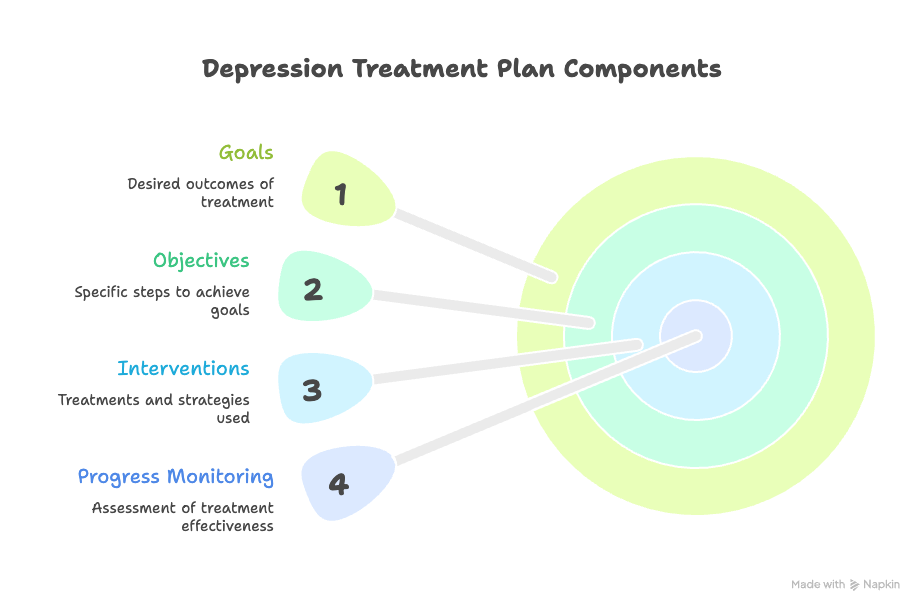
Goals
Goals reflect the improvements in mood and daily functioning you're working toward. These might include:
Reducing depressive symptoms
Improving sleep quality
Returning to work or social activities
Developing healthier coping skills
Reducing feelings of hopelessness
Objectives
Objectives are specific, measurable, achievable, relevant, and time-bound (SMART) steps that help you reach your goals. For example, if your goal is to reduce depressive symptoms, an objective might be: "Attend weekly therapy sessions for 12 weeks and practice cognitive restructuring techniques daily."
Interventions
Interventions are the actual treatments and strategies you’ll use. These fall into three main categories: psychotherapy, antidepressant medication, and lifestyle changes. Treatment for depression is increasingly personalized, with methods ranging from lifestyle interventions for mild symptoms to brain stimulation for severe cases.
For mild depression, guided self-help interventions based on cognitive behavioral therapy (CBT) are often recommended. This can include working through structured materials, such as an online course, which provides evidence-based, accessible self-help resources that can be completed with or without therapist support.
Behavioral activation is another therapeutic approach that focuses on increasing engagement in meaningful activities to improve mood in individuals with depression.
Progress Monitoring
Your treatment plan includes criteria for assessing how you're doing—typically using standardized measures like the PHQ-9 at regular intervals. This helps you and your provider know whether the plan is working or needs adjustment.
How Is Your Treatment Plan Created?
Creating an effective depression treatment plan starts with a thorough assessment. Your mental health professional will evaluate:
Your Symptoms: Which depressive symptoms you're experiencing, how severe they are, and how long you've had them. To receive a diagnosis of major depressive disorder, you must meet certain criteria specified by the DSM-5-TR, including having at least five symptoms present most of the day, nearly every day for at least two weeks.
Your Psychosocial Context: Relationship issues, work problems, substance use, or other life circumstances that may be contributing to or affected by your major depressive episode. These factors inform which interventions will be most helpful.
Functional Impairments: How depression is affecting your daily life—work performance, relationships, self-care, and other important areas. Treatment goals often aim to improve these specific areas.
Safety Concerns: If you're having thoughts of self-harm or suicide, your treatment plan will include a safety plan and interventions that address these concerns as a top priority.
Your Preferences and History: What treatments you've tried before, what worked or didn't work, and what approaches you're most comfortable with. Involving you in setting treatment goals increases your motivation and engagement in the treatment process.
In our work with Baltimore-area clients, we've found that the most effective treatment plans are truly collaborative. When clients feel heard and involved in the planning process, they're more likely to stay engaged with treatment and follow through with recommendations. We don't just create a plan for you—we create it with you, taking into account your unique circumstances, preferences, and goals. This partnership approach, where your input shapes the direction of treatment, makes a real difference in outcomes.
What Treatment Options Might Be Included?
Based on your assessment and severity level, your treatment plan will include one or more evidence-based approaches for adults treatment:
Psychotherapy (Talk Therapy)
Several types of psychotherapy have strong evidence for treating major depressive disorder:
Cognitive Behavioral Therapy (CBT): Also called cognitive therapy, this helps you identify and change negative thought patterns and behaviors that contribute to depression. CBT techniques focus on cognitive restructuring and addressing behavior patterns.
Behavioral Activation: A form of behavioral therapy that focuses on increasing engagement in positive, meaningful activities to improve mood.
Interpersonal Therapy (IPT): Also called interpersonal psychotherapy, this addresses relationship issues and life transitions that may be linked to your major depressive episode.
Problem-Solving Therapy: Teaches structured approaches to solving life problems that feel overwhelming.
Mindfulness-Based Psychotherapy: Teaches awareness and acceptance of thoughts and feelings in the present moment without judgment.
Psychodynamic Therapy: Also called psychodynamic psychotherapy or brief psychodynamic therapy, this explores how unconscious thoughts and past experiences influence current feelings and behaviors.
Supportive Therapy: Provides emotional support, encouragement, and practical guidance as you work through depression.
Research shows that these psychotherapies produce medium to large improvements in depressive symptoms compared to usual care. Psychotherapy typically involves weekly sessions for at least 12 weeks, and the benefits can last for years after treatment ends.
Antidepressant Medications
Multiple antidepressant medications are proven effective for treating major depressive disorder. The most commonly prescribed antidepressant medication types include:
Selective Serotonin Reuptake Inhibitors (SSRIs): Such as sertraline (Zoloft), escitalopram (Lexapro), fluoxetine (Prozac), citalopram (Celexa), and paroxetine (Paxil).
Serotonin-Norepinephrine Reuptake Inhibitors (SNRIs): Such as venlafaxine (Effexor), duloxetine (Cymbalta), and desvenlafaxine (Pristiq).
Tricyclic Antidepressants: An older class of antidepressants that may be used when other medications haven't worked effectively.
Other Antidepressants: Such as bupropion (Wellbutrin) and mirtazapine (Remeron).
Research shows that all 21 commonly used antidepressants are more effective than placebo, with small to medium effects on symptom improvement. Among commonly prescribed medications, escitalopram and sertraline rank well for both effectiveness and tolerability.
Lifestyle and Self-Management Strategies
In addition to formal therapy and antidepressant medication, several lifestyle approaches can support your recovery:
Exercise: Physical activity improves depressive symptoms with a moderate effect. Most adults should aim for at least 150 minutes of moderate-intensity exercise per week (like walking for 30 minutes, 5 times per week).
Improve Sleep Hygiene: Maintaining a regular sleep schedule and addressing insomnia can significantly impact depression symptoms. Good sleep hygiene includes consistent bedtimes, limiting screen time before bed, and creating a comfortable sleep environment.
Nutrition: Eating a balanced diet with adequate protein, omega-3 fatty acids (from fish), vitamins (especially folate and vitamin D), and minerals (iron and zinc) may help.
Avoiding Alcohol and Smoking: Both can worsen depressive symptoms and interfere with treatment effectiveness.
From a clinical perspective, we see the best outcomes when clients combine formal therapy or medication with lifestyle changes. Depression isn't just about brain chemistry or thought patterns—it's influenced by how you move your body, what you eat, how you sleep, and how you spend your time. A comprehensive treatment plan addresses all these factors, not just one or two. That's why we work with clients to identify realistic lifestyle modifications they can maintain.
How Treatment Recommendations Differ by Severity
Your treatment plan will be tailored to your depression severity:
For Mild Depression (PHQ-9 less than 10):
Psychotherapy is recommended as the first-line treatment
Antidepressant medications are usually not needed initially
Lifestyle changes like exercise and guided self-help may be helpful
Watchful waiting (monitoring symptoms closely) may be appropriate
For Moderate Depression (PHQ-9 10 to 14):
Either psychotherapy or antidepressant medication can be recommended
The choice should be based on your preference, availability, expert recommendations, and individual circumstances
Combining medication and psychotherapy may work better than either alone
For Moderately Severe to Severe Depression (PHQ-9 15 or higher):
Combination therapy with both psychotherapy and antidepressant medication is usually recommended
Research suggests that this combination produces better results than either treatment alone
More frequent monitoring and follow-up is needed to treat severe depression effectively
What to Expect: Treatment Timelines
Understanding realistic timelines helps set appropriate expectations:
For Antidepressant Medications (based on research):
Starting dose: Medications typically start at a low dose and are increased gradually over time
Early improvement: Some improvement may be noticed as early as 2 weeks
Full benefit: Full relief of symptoms may not occur for 8 to 12 weeks at the same dose
Side effects: Minor side effects like nausea or headache often improve within 1 to 2 weeks
For Psychotherapy:
Weekly sessions for at least 12 weeks are typical
Many people notice improvement within 4 to 6 weeks
Full benefits may take 3 to 4 months
Depending on the type of therapy benefits can last for years after treatment ends
It's important to continue with your treatment plan even if you don't feel better right away. Depression treatment takes time, and early improvement is often gradual.
How Your Treatment Plan Evolves
Regularly reviewing and updating your treatment plan is essential—it's not a static document. Your mental health professional should:
Monitor Progress: Using standardized measures like the PHQ-9 at regular intervals to track symptom improvement and establish clear treatment goals.
Assess What's Working: Determining which interventions are helping and which may need adjustment based on clinical judgment.
Address Barriers: Identifying and solving any obstacles to following your treatment plan, such as side effects, scheduling challenges, or cost concerns.
Adjust as Needed: Modifying goals, changing interventions, or adding new strategies based on your person's response to treatment.
You should have contact with your provider at least monthly until your symptoms improve—many of these check-ins can be done by phone or secure messaging rather than in person.
What If Your First Treatment Doesn't Work?
Up to half of people starting treatment for depression don't improve significantly with the first approach. This is common and doesn't mean you won't get better—it just means your treatment plan needs adjustment.
If your initial treatment isn't working, options to treat depression include:
If psychotherapy alone isn't helping: Adding antidepressant medication
If medication alone isn't helping: Adding psychotherapy, switching to a different medication, or adding a second medication
For severe depression that hasn't responded: Advanced options like Transcranial Magnetic Stimulation (TMS), Electroconvulsive Therapy (ECT), or newer therapies like ketamine/esketamine
Newer Treatment Options: Recent advances include rapid-acting treatments like esketamine (approved for treatment-resistant depression, providing relief within 24 hours) and zuranolone (specifically FDA-approved for postpartum depression). Some providers also use genetic testing to match patients with the most effective medications based on their biology—an approach called precision psychiatry.
Your provider will work with you to find the right combination of treatments for your specific situation.
We've worked with many clients in Baltimore, Towson, and throughout the area who felt discouraged when their first treatment approach didn't work as hoped. What we consistently see is that persistence pays off. Depression treatment often requires some trial and adjustment to find what works best for you. We stay closely connected with clients during this process, making thoughtful changes to the treatment plan. Your willingness to keep working toward recovery is one of the most important factors in eventual success.
How Long Should Treatment Continue?
Once your depression improves, it's important to continue treatment to prevent recurrent depression:
After first major depressive episode: Continue antidepressant medication for at least 6 months after symptoms improve
After multiple major depressive episodes: If you've had 2 or more episodes, consider continuing treatment for 2 years or longer
Maintenance therapy: Some people with recurrent depression may benefit from long-term or indefinite treatment
Your treatment plan will include a relapse prevention strategy to help you maintain the progress you've made.
Relapse Prevention
Relapse prevention—it's like building a sturdy foundation under your mental health recovery. Even when those depressive symptoms start lifting and you're feeling more like yourself again, that's actually when the real work begins. You'll want to take proactive steps to keep future episodes at bay and protect the progress you've fought so hard to achieve. Think of it as safeguarding your mental health investment—and that means staying closely connected with your mental health team, setting clear treatment goals, and developing strategies that support your long-term well-being.
One of the most powerful tools in your relapse-prevention toolkit? Continuing with evidence-based therapies like cognitive behavioral therapy (CBT) or interpersonal therapy (IPT). These approaches aren't just therapeutic buzzwords—they're your mental health workout regimen, helping you identify and reshape those negative thought patterns that can spiral into something bigger. You'll build genuine coping skills and tackle relationship issues that might otherwise trigger a return of symptoms. Behavioral therapy techniques—including behavioral activation—keep you engaged in meaningful activities and give you practical ways to manage stress before it manages you.
For many people, ongoing medication becomes part of the long-term strategy. Selective serotonin reuptake inhibitors (SSRIs) or serotonin norepinephrine reuptake inhibitors (SNRIs) at a maintenance dose can provide that steady neurochemical support your brain needs to stay balanced. Your mental health professionals will monitor your progress regularly—think of them as your recovery pit crew—making adjustments to your treatment plan based on how you're responding and any new challenges that pop up along the way.
Lifestyle factors aren't just nice-to-haves; they're cornerstone elements of relapse prevention. Good sleep hygiene, balanced nutrition, regular exercise, and stress management—these daily choices contribute to your overall mental health foundation. Learning and practicing coping skills like problem-solving and mindfulness gives you the tools to navigate life's inevitable ups and downs more effectively. It's like having a well-stocked mental health toolkit ready when you need it most.
Relapse prevention works best when it's a collaborative effort—you're not going it alone. By staying connected with your mental health team, keeping tabs on your symptoms, and making adjustments to your treatment plan as needed, you can significantly reduce the risk of future depressive episodes. You're not just managing symptoms; you're actively building a healthier, more resilient life—one that can weather whatever storms come your way.
Technology Integration in Depression Treatment
Many mental health professionals now use technology to enhance treatment planning and monitoring:
Electronic Health Records (EHRs): Streamline documentation, automate reminders for treatment plan reviews, and ensure compliance with treatment standards.
Patient Portals: Allow you to access your treatment plan, complete assessments like the PHQ-9 online, and communicate securely with your provider.
Telehealth Platforms: Enable remote therapy sessions and medication management, making treatment more accessible.
Measurement-Based Care: Technology facilitates regular tracking of symptoms and treatment effectiveness, helping your mental health team make data-driven adjustments.
These tools can make it easier for you to stay engaged with your treatment and for your mental health team to provide coordinated care.
Working with Your Mental Health Team
Depending on your needs, your mental health team might include:
Psychiatrists or primary care physicians (for medication management)
Therapists or clinical psychologists (for psychotherapy)
Occupational therapists (for functional skills training)
Care coordinators (in collaborative care programs)
Collaborative care programs—which include systematic follow-up, outcome assessment, and consultation with mental health specialists when needed—significantly improve treatment effectiveness compared to usual care.
Taking an Active Role in Your Treatment Plan
Your involvement in your treatment plan makes a difference. Here's how you can participate actively:
Ask Questions: Don't hesitate to ask your provider about any part of your treatment plan you don't understand
Share Honestly: Let your provider know what's working, what isn't, and any concerns you have
Track Your Progress: Pay attention to changes in your mood, energy, and functioning
Follow Through: Attend scheduled appointments and take medications as prescribed
Speak Up About Preferences: Your treatment plan should reflect your values and preferences
The more engaged you are in the process, the more likely your treatment plan will be effective.
When to Seek Immediate Help
If you're having thoughts of harming yourself or suicide, seek help immediately:
Call 988 (Suicide and Crisis Lifeline)
Go to your nearest emergency room
Call 911
Your safety plan should be part of your treatment plan if you've had thoughts of self-harm.
Moving Forward
Major depression is a common and treatable medical condition. With an effective treatment plan, regular monitoring, and appropriate adjustments along the way, most people with major depressive disorder experience significant improvement in their depressive symptoms and quality of life.
Understanding what goes into your treatment plan—from the initial assessment through ongoing adjustments—helps you feel more prepared and empowered in your recovery. Remember that treatment plans for depression are collaborative, personalized, and designed to evolve as your needs change.
If you're struggling with depression, the therapists at the Baltimore Therapy Group are here to help. We create comprehensive, evidence-based treatment plans tailored to your unique needs and circumstances. Schedule an appointment to get started.
Frequently Asked Questions About Treatment Plans for Depression
What is a treatment plan for depression and why is it important?
A treatment plan for depression is a collaborative document developed between you and your mental health provider that outlines your specific goals, interventions, and how progress will be measured. It is important because it provides a personalized roadmap based on evidence-based practice, addressing your unique symptoms, preferences, and life circumstances to improve depressive symptoms and daily functioning.
How do antidepressant and antipsychotic medication fit into depression treatment?
Antidepressant and antipsychotic medication can be a part of combination therapy for moderate to severe depression, especially when psychotic symptoms or bipolar disorder are present. Antidepressants like selective serotonin reuptake inhibitors (SSRIs) and serotonin norepinephrine reuptake inhibitors (SNRIs) are commonly prescribed, while antipsychotic medication may be added to address psychotic features or treatment-resistant cases.
What role does clinical psychology play in managing depression?
Clinical psychology provides various psychotherapy approaches such as cognitive behavioral therapy (CBT), psychodynamic therapy, and interpersonal psychotherapy, which are essential components of depression treatment plans. These therapies help modify negative thought patterns, improve coping skills, and address relationship issues contributing to mental disorders.
How are recurrent thoughts of self-harm or suicide addressed in treatment plans?
When recurrent thoughts of self-harm or suicide are present, treatment plans include safety plans and interventions to manage these risks. Mental health professionals collaborate with patients to develop strategies that ensure safety, often involving family or human services and monitoring by a mental health team.
Can technology help with depression treatment planning?
Yes, technology such as electronic health records (EHRs) and online courses can enhance treatment planning by facilitating progress monitoring, ensuring compliance with clinical practice standards, and improving patient engagement. Telehealth platforms also allow for remote therapy sessions, increasing accessibility.
What are couples therapy and its benefits in depression treatment?
Couples therapy involves both partners in sessions to address relationship issues that may contribute to depression. It can improve communication, support systems, and overall treatment outcomes by fostering a healthier relational environment.
How does health and human services support individuals with depression?
Health and human services provide resources and support systems that assist individuals with depression in accessing care, managing social determinants of health, and connecting with community services that enhance treatment adherence and recovery.
Why is it important to consider blood pressure and other medical factors in depression treatment?
Certain antidepressant and antipsychotic medications can affect blood pressure and other physiological functions. Monitoring these factors is essential to ensure safe medication management and to tailor treatment plans that consider overall health.
What does clinically significant distress mean in the context of depression?
Clinically significant distress refers to the level of emotional or functional impairment caused by depressive symptoms, which justifies the need for treatment. It is a key criterion in diagnosing major depressive disorder and guides the intensity of interventions in the treatment plan.
How do psychiatric disorders influence the development of a depression treatment plan?
The presence of other psychiatric disorders, such as bipolar disorder or psychotic symptoms, impacts the choice of interventions and medications in a treatment plan. Accurate diagnosis and consideration of co-occurring conditions ensure that the plan addresses all relevant mental health needs effectively.
Disclaimer: This article is for educational purposes only and is not a substitute for professional medical advice, diagnosis, or treatment. Always seek the advice of your physician or qualified mental health provider with any questions you may have regarding a mental health condition. If you are in crisis or experiencing thoughts of self-harm, please call 988 (Suicide and Crisis Lifeline) or go to your nearest emergency room.