
Staying Grounded During ED Awareness Week
Some Reflections from Dr. Andrea Castelhano During Eating Disorders Awareness Week

Eating Disorders Awareness Week is here, bringing important conversations into the spotlight. The increased visibility of eating disorders and their treatment has been a huge step in our cultural understanding of these illnesses, helping to demystify and debunk common myths such as what it looks like to have an eating disorder and who is at risk. Greater awareness and access to care can be lifesaving.
Greater awareness of eating disorders has led to meaningful progress in prevention, early intervention, and treatment for those with access. These campaigns hope to reduce stigma, encourage help seeking, provide support to loved ones, increase representation, and advocate for policy changes, insurance coverage for care, and funding for research.
At the same time, awareness campaigns can be overwhelming and activating, particularly to those currently struggling. A week filled with statistics, personal stories, body-focused language, and imagery can be destabilizing.
It’s not uncommon to notice yourself engaging in more symptoms and/or body comparison due to exposure to eating disorder content. This often comes with spikes in urges to act on symptoms, heightened body image distress, and emotional fatigue. Feeling alienated can also be a normal reaction when your experience doesn’t align with what is being portrayed.
When you consider how stigmatizing and challenging it is to talk about eating disorders, it makes sense. It’s a lot of metal gymnastics to go through when all of a sudden, it’s much of what you are hearing about and seeing on social media.
It’s okay if you’re not okay. This week doesn’t have to feel empowering. It’s healthy to notice how the discourse this week is impacting you and to step back if needed. Awareness campaigns are meant to serve us as a population rather than overwhelm individuals experiencing eating disorders.
Coping Strategies to Consider During Eating Disorders Awareness Week
So, let’s talk about protecting your mental health this week. If you’re navigating an eating disorder, here are some ideas to consider.
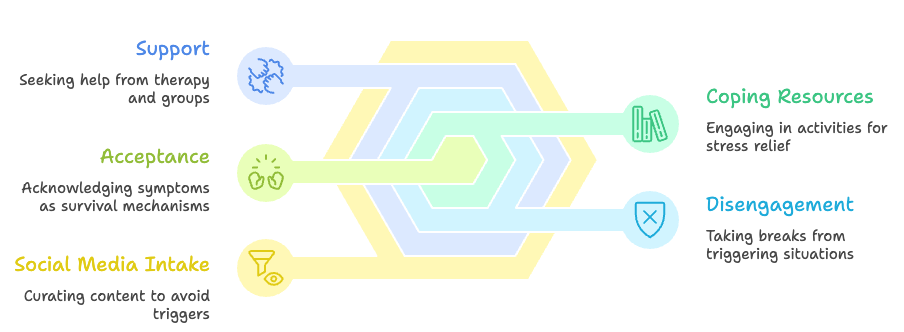
Curating your social media and intake. Mute or unfollow triggering accounts temporarily, potentially including treatment oriented pages.
Setting boundaries. You don’t owe anyone your story or participation, no matter how many people you see sharing their experience or asking about your own. Consider whether this is the right time for you, what you are needing through disclosure, and who to talk to if you do decide to come forward.
Grounding yourself in recovery-focused content. Seek resources that emphasize healing rather than symptom details.
Reaching out for support. Connection through therapy, support groups, and community buffers triggers.
Giving yourself permission to disengage. Awareness can happen without your direct involvement.
Leaning into your coping resources. It can be a great time to absorb yourself in a good book, binge watch a show, and make plans with friends. Having tools to cope with increased anxiety like relaxation strategies can also be useful.
Acceptance. This week may bring with it more symptoms and that’s okay. It’s not a failure, symptoms are oftentimes a survival mechanism for managing high distress, overstimulation and adversity.
If you’re thinking about participating in ED awareness week, strive for contributions that are trauma-informed, free of graphic details and specific metrics, centered on hope and recovery, inclusive of diverse experiences, focused on support resources and meaningful steps we can take as a community to further promote robust awareness for eating disorders, culturally attuned support, and address barriers for care.
If your mental health is struggling right now, you are not failing because this week feels hard. If awareness helps you take a step toward support, that matters too. Hope and heaviness can coexist. Wherever you are in your process, you deserve care, compassion, and access to effective treatment and resources. Not just this week, but every day.
- Andrea